
They used to call me chisel face. Happy to have an excerpt from my novel in progress, The Dreamlife of Honey, in new body issue of Lighthouse magazine from Norwich.
about
-
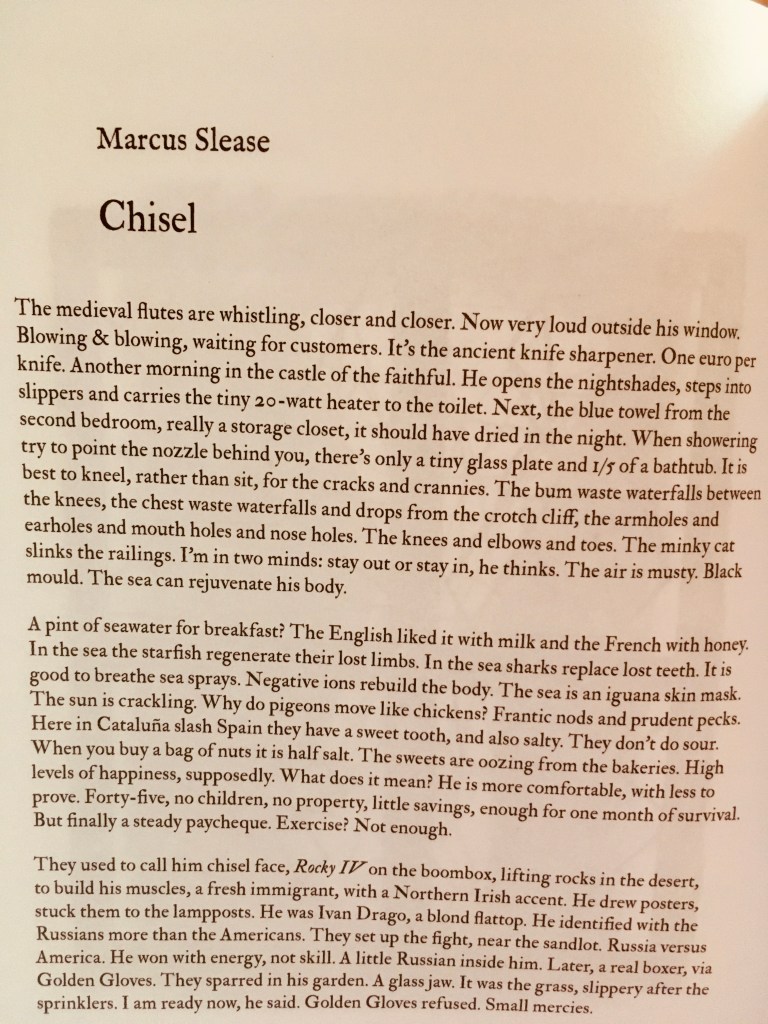
from “Chisel” by Marcus Slease -
I’ve just found my favourite magazine, Music & Literature, and splurged on a one year digital subscription (£20). I don’t usually read a lot of literature online. I used to read poetry online, maybe a flash fiction, but nothing too long. Now I am using my Kindle, more and more. Although I still have plenty of paper books on my to-read shelf.
I’ve started thinking more and more about when to order the paper book and when to order the digital book. In most cases, it seems, I am trying to order the paper books only when the book itself is both a beautiful object and I love the writing. Although sometimes I have ordered an ugly novel from Faber & Faber (Victor Pelevin), but I didn’t know the book was ugly before I ordered it.
Some books that meet both form and content include: Fitzcarraldo Editions, Boiler House Press, Archipelago Books, Twisted Spoon Press, Dostoyevsky Wannabe, Influx Press, Galley Beggar, Open Pen. It is not only about the paper, but good paper is certainly a consideration. It is about the design. The texture. The feel of the book. I prefer thick pages. Minimalist design. Sometimes the book is unavailable in digital form and the print form is nothing special. This is a dilemma. An ugly book, but only on rare occasions.
It didn’t used to be this way. I collected paperbacks in the 80s and 90s. Cheap mass paperbacks. The mass paperback was democratic, more folks could afford it. A reading revolution. But now we have digital, usually cheaper, so the print form has to be something special. There are some exceptions. The paperbacks of NYRB Classics, sometimes Vintage/Penguin. A few others.
I am also thinking of music. Buying a record versus streaming/mp3 etc. It has to be something special for me to buy the record (well records are usually more expensive than books for one thing). Also, I don’t like clutter. Or owning too much. Books are the exception. I have less than 50 records.
So I’ve taken the plunge. My first digital magazine subscription. I spent a few days reading the free content from the magazine and realized it doesn’t get any better. So many international artists, often in translation, unavailable anywhere else. The latest issue features translations of Peter Bichsel (some by Lydia Davis). I love everything Lydia Davis. Each issue features three artists. There is an issue with Mary Ruefle. Another one with Éric Chevillard. I just started reading Éric Chevillard last week, his Palafox, on my Kindle. He is becoming a favourite. I am going to order his Prehistoric Times, from Archipelago Books. Thick pages.
I am reading more and more novels on my Kindle. My coursebooks for high school classes are now digital. I am making more and more moves towards the digital. I still love a beautiful print book, but I’ve become more selective. Poetry books on the Kindle? No. Not unless they are prose poems.
Disadvantages of Kindle: You cannot go back and forth flipping through pages and opening at random. You cannot look at the cover on your bookshelf and remember your reading experience. So that’s the other reason for the print book. If I absolutely love a book I’ve read on the Kindle, I usually also purchase it for the bookshelf. This has been the case with Jeanette Winterson (the paperbacks are nothing special, but I love her novels). Also Beckett somehow doesn’t feel the same on a Kindle. Maybe, over time, I will become more and more used to digital reading. Although print reading has imprinted many strong impressions from an early age. For now, and always, I’ll stay hybrid. In more ways than one.
-
In 2006, after ten years of marriage and a looming divorce, he flew to South Korea. He created a good face for the job. A good face is the key.
Love? Yes please!
Doraji doraji doraji! I walk over the pass where balloon flowers bloom. Hey-ya, hey! An ya hey say yo! I walk over the pass where balloon flowers bloom. Hey-ha hey! An ya hey say yo! Reminds me of mother and twinkling boys. Hey-ya, hey! An ya hey say yo!
Here is an excerpt from Never Mind the Beasts, available now from Dostoyevsky Wannabe.
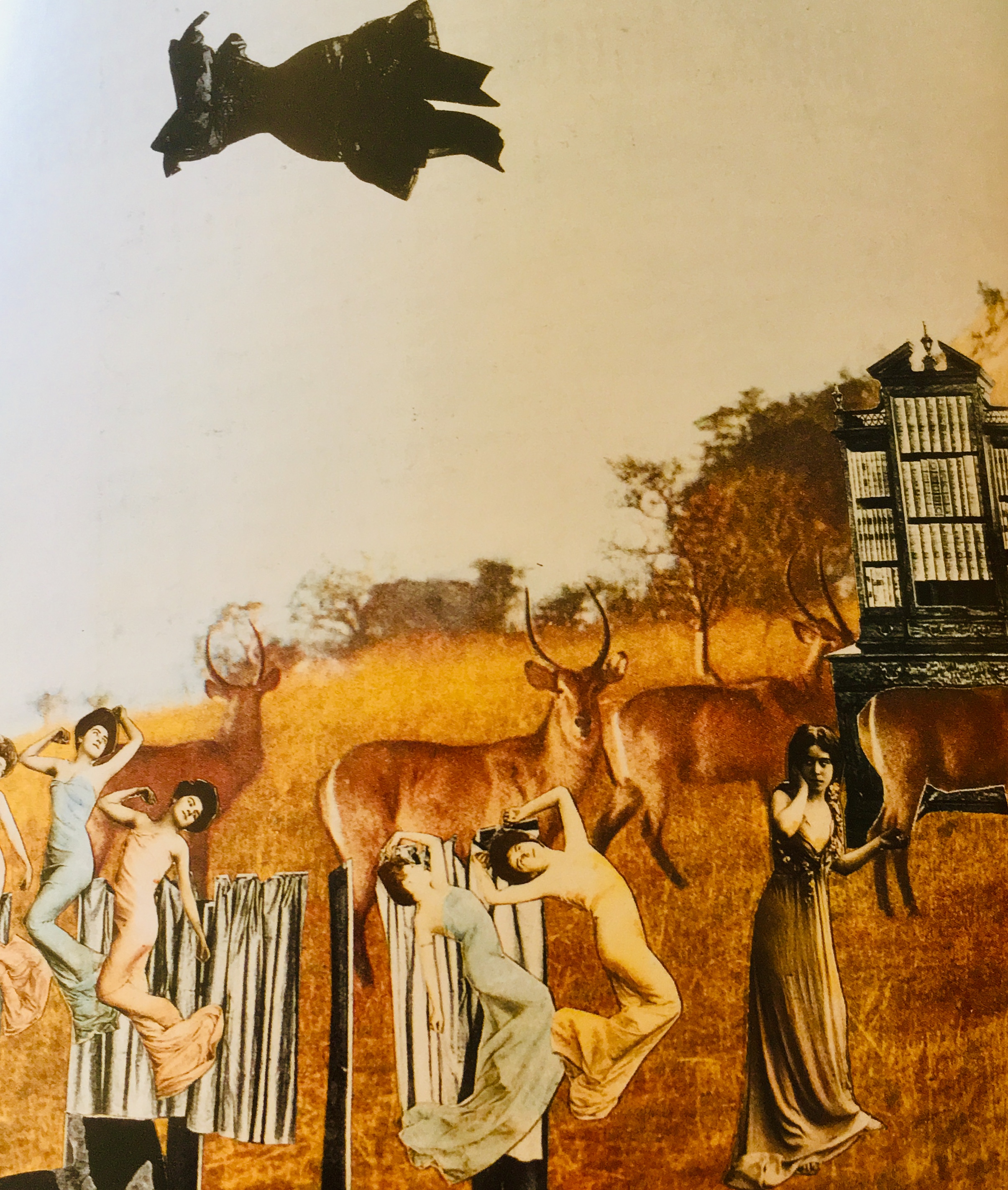
from Never Mind the Beasts by Marcus Slease. Image: Figuras fantásticas a caballo by Leonora Carrington -
I have finished the second novel of my nomadic surrealist trilogy. The first, Never Mind the Beasts, has the wide lens. The next two the zoom. First person genderless.
The second novel, Hermit Kingdom, is about a language teacher from Poland who migrates to Spain for a new life. Away from the expectations, history and complicated past of their home country, they try to live a simple life, walking in nature and eating healthy, scraping by teaching English as a foreign language, and trying to make sense of existence. Suddenly there is a new pandemic and they are stuck inside, alone and not alone. What is the white monkey? Why are they learning secret handshakes through a hole in a white blanket? Who are you really? Some people are told to find someone to complete themselves and also become somebody. Some people are told to find somebody but not become somebody. Some people are told to become somebody but not to find somebody. I am somebody first and can find anybody later, but when do you know when you are somebody enough to find anybody. What is the complete equation?
The third novel, still in progress, is called The Dreamlife of Honey. It is a shamanistic self help book, with many travels. It is full of bonobos.
And alas, the trilogy is coming into focus. But I am not sure if it will stop there. I am writing a cosmos.
-
Don Whiskers and Pineapple live in the Docklands, East London, in a council flat. They visit the river for ancient histories. They take the Mega Bus in the Mega City and visit Amsterdam. They stay on a boat called The Gandalf. Back home, they stand on the balcony from the cheap seats and look at Morgan Stanley and HSBC with glowing red lights. They find shiny dinosaurs among the monuments to finance. The monuments are too removed from the human hand. Bring back the human hand. They use their human hands to collect clippings from plants and grow them with superfood. They want them to grow big and strong.
Here is a reading from the Docklands section of my debut novel Never Mind the Beasts, available now from Dostoyevsky Wannabe.
The Docklands by Marcus Slease -
While working in Trieste as a dog walker, and trying to become a writer, he imagines James Joyce, middle class or higher, like almost all artists and writers. He does not have the advantages but also the advantages, coming from somewhere else. You can only do so much, but how much.
The bora howls and howls. His relationship is failing. She wants the product and he wants the process. His wild horses are running away from him. Looking out to sea at Piazza Unita. A nomadic existence, but also stability. Trying to juggle them, like everyone.
Here is a reading from the Italian section of my debut novel Never Mind the Beasts, available now from Dostoyevsky Wannabe.
“Bora” from Never Mind the Beasts by Marcus Slease -
He took a long time to do it, or at least a long time for some. After the mission, at age 20, he went back to N.Ireland and England, tried on a condom at his cousin’s house, just for the fitting. He wanted to become bohemian and watched Pulp Fiction at the theatre.
He met a young woman from Australia and she told him about doing it, and when you do it, you miss it, and he missed it, even though he hadn’t done it. Then he went to college, at Southern Utah University, worked at a call centre selling Burpie seeds, and before he knew it he was married. They read the patriarchal blessing. They felt the burning in their bosoms.
They moved to Bellingham, WA and then Greensboro, NC. Then, after ten years, the divorce and leaving the United States of America forever for a nomadic existence. No more alien card.
Here is a reading about those years of young love, from my debut novel Never Mind the Beasts, available now from Dostoyevsky Wannabe.
from Never Mind the Beasts by Marcus Slease -
Sad disappointing scary day with Polish elections. Here are some poems from Grzegorz Wroblewski. He was there in Warsaw in the 80’s. Part of the underground punk network, the fight against fascists and the beginning of democracy.
Poetry by Grzegorz Wroblewski (Translated by Piotr Gwiazda): jacket2.org/poems/five-poems-wroblewski
Paintings by Grzegorz Wroblewski.
Performed by Marcus Slease -
After returning home early from the mission, I had my first sexual experience, it was called docking. I took off my secret garments and attended the trial, in a big wooden room. The devils were coming.
I couldn’t return to my job at the mercantile. Every job interview in the small town asked me if I still believed. But eventually I found a job, in a nearby town, as a shoe salesman, at J.C. Penny, and began dating and attending Jr College dances, posing on haystacks, trying to make myself into something different.
Here is a short excerpt from my novel Never Mind the Beasts, available now from Dostoyevsky Wannabe.
-
My debut novel, Never Mind the Beasts, has many movements, from many lifetimes and many countries. When I lived in North America, I lived in many states, both physically and mentally, and you might also say spiritually. I went on a holy mission (from 1993-1994) to Boise, Idaho. Age 19-20. But I returned home early, took off my secret underwear, and much later revealed the secret handshakes, and even my secret name. I am supposed to be disemboweled, and also beheaded, according to the signs I made in the secret chambers, but it hasn’t happened, maybe it happens later, after my death, before I am sent to outer darkness for denying the holy spirit. I don’t believe it, but it still scares me.
Here is an excerpt from Never Mind the Beasts. The holy mission and returning home early. This is a true story:
-
There is so much of it, and from an early age it was all about the work, working hard to climb a ladder, and we are all climbing ladders, of some sort, hoping for something better, and too much moaning doesn’t help, but it’s there, sometimes hard to put your finger on it, it’s there, less visible sometimes, in one way or another, how I tried to disguise it, changing my voice over and over, from working class Northern Irish to working class British and then just plain small town American, where the accents don’t give you away so easily, and then changing my clothing, trying to pass for middle class, and then feeling guilty, what am I really, if you like too many comforts you are becoming middle class, but that’s a narrow reality, all those small boxes of our identities. But yes, it was there, in London when I worked at a private university, as an adjunct/fractional instructor, and most of the other lecturers and professors had posh accents, and I felt out of place, tried to change my clothes and dress more conservative, and after over six years of working there I was never fully comfortable, feeling like an imposter teaching classes at a university, and I have that dream often, with variations, the imposter.
Now, here, a high school teacher, it feels more natural, but for so long I wanted to teach university, I saw the pictures, a professor in a comfortable chair with lots of books surrounding them, a pipe in their mouth, comfortable in their existence in a world of ideas and art, but that was not the reality, and high school teaching is more of a grind, but less pretentious, and I never felt at home with the university bursting with their self righteous theories, but, and yet, I did, I loved the chance to think and read and discuss, and then later, do some creative writing as a graduate student, that was something I could never have guessed existed, living breathing artists and writers, and my university days as a student were filled with wonder, especially as an undergraduate, and in America, since I went to state universities for eight years of education, I felt the class consciousness less often, although it was there too, during graduate school especially, there were quite a lot of upper middle class people there, and I tried to fit into that world, but I didn’t. What am I even talking about, I like middle class art, cinema, poetry, music, novels, and I don’t want to be confined to some narrow definition of the working class narrative, from misery to redemption, or just misery forever, and I probably wouldn’t refuse money from some fellowship or other, if it was handed to me, and I am enjoying comforts, like healthy eating, sunshine, and meditation, but my background is fully working class, for generations upon generations, but maybe I am climbing out of it, in mind, not income, and is that so terrible, and what is middle class anyway, and what am I even talking about.
Now, here, one of many foreign countries I have lived in, trying to find a sense of place (impossible), but at least somewhere I can survive financially and psychologically and create my art after a full day of high school teaching, and it is happening, I can do it, you can do it, if you make time for it, if it is really necessary. Never Mind the Beasts, an experimental working class novel, my debut novel at age 46, has just been published, and that feels like something, and I feel lucky to have it with a press very aware of class consciousness, with the editors from working class backgrounds, and very little money, and still finding a way to put out books that other publishers pass over, because it doesn’t fit the dominant middle class aesthetic and readership, and that is really something. I don’t have time and money to attend exotic art colonies or travel around on reading tours and I don’t win fellowships and prizes, I am not connected. I just work for money and survival and make time for my art when I find it, and it is a good life really, one fully chosen consciously, to attend university, despite the overwhelming odds against it, and make time for reading and thinking, even though no one I knew went there, and creating art, and to do that, since I don’t come from the money, and can’t become a bohemian with something to fall back on, I have to live a minimalist existence, no car, property, children, savings, retirement, just simple living, full time work, and great love, and that is how I make time for the art/writing, and it is the only thing really keeping me going, it is not a luxury, or a commodity, it is a necessity.
-
Art can help us see and hear and smell and taste and touch with a more attentive mind. And there is so much to explore. Art can help us have a beginner’s mind. Empty and open. Art is my medicine and also my spiritual practice.
Here is an interview, upon the release of my first novel, Never Mind the Beasts, with a discussion of some artistic vitamins and minerals (Norwegian writers and experimental jazz, surrealists, NY School poets, and more).
-
The experimental writer, artist, and musician Stephen Emmerson has been running a podcast entitled “Post Apocalyptic Poems.”
Post Apocalyptic Poems is a new series which imagines that an unspecified event has taken place which forces families to take shelter in underground bunkers.You can only take 6 books of poetry with you. When you emerge from the bunker after 3 or 4 years these books will be the starting point from which you can help to rebuild culture. You can also take one novel and one non fiction book. What would you choose?
The recording/discussion of my bunker poems (with one fiction and non-fiction) is available over here: Post Apocalyptic Poems Episode 2
-
Super grateful. My debut novel, Never Mind the Beasts, 10 years in the making from many countries, is now available for ordering. You can choose Blackwell’s or Amazon. Waterstone’s, Foyles, and Barnes and Noble will be added as an ordering option soon.
Here is a description:
Never Mind The Beasts is Marcus Slease’s second book for Dostoyevsky Wannabe and his debut novel. Beginning in Portadown, Northern Ireland during the Troubles, the book details the author’s move with his family, as a small boy, first to Milton Keynes and then to Las Vegas before documenting his further solo travels trying to survive on the meagre pickings of a writer whilst teaching English as a second language in everywhere from South Korea, Poland to Turkey and, latterly, Spain (Madrid and Barcelona).
“Writing actually as love! Marcus Slease’s crinkling, crackling prose is full of sparks, full of troubles, full of wonder. Never Mind the Beasts radiates with the force, brevity and immediacy of stylists like Mary Robison, Rikki Ducornet and Diane Williams. “The demand to love,” wrote Roland Barthes at the beginning of Roland Barthes by Roland Barthes; “overflows, leaks, skids, shifts, slips.” “Writing to touch with letters, with lips, with breath,” wrote Hélène Cixous in Coming to Writing. These are the thrilling, vibratory spaces, movements and possibilities Slease’s writing opens up.”
-Colin Herd, author of You Name It“Say Lydia Davis and Donald Barthelme had a son, and his life story was painted by Basquiat, and the paintings were ground up into a spice, then used to flavour a crazy-hot dish you just can’t stop eating while the scenery shifts around you: that taste might be something like Never Mind the Beasts.”
-Ruby Cowling, author of This Paradise“Robust pro aktiv quixotik goes evreewher is from evreewher nouns ar verbs verbs ar yu a nu way uv intraktivitee langwage th narrativ rocks takes yu evreewher thers no conclewsyun its in th going, wundrful a great xperiens ths book.”
—bill bissett, author of BrethYou can order the novel over here: Never Mind the Beasts
-
Here is another excerpt from Part One of my novel, Never Mind the Beasts, coming this month (May 2020) from Dostoyevsky Wannabe.
This excerpt takes place in Milton Keynes, Coffee Hall Housing Estate, on a street called Daniel’s Welch. It is the 1980s.
Religious conversion, E.T., a used Chopper, the dole, government housing, wow comics, the toothbrush lesson, Jesus Christ Superstar, rugby and fire hoops, hammer and piggy, a millennium falcon.
Milton Keynes 2 (from Never Mind the Beasts) from Marcus Slease on Vimeo.
-
Here is an an excerpt from Part One of my novel, Never Mind the Beasts, coming this month (May 2020) from Dostoyevsky Wannabe.
This excerpt takes place in Milton Keynes, Coffee Hall Housing Estate, on a street called Daniel’s Welch. It is the 1980s.
Field Day, the magic of bathtubs & Milton Keynes roundabouts, a pet gerbil, Copperfield Middle School lunch room, a popped football, peer pressures, Bletchley swimming pool, hot chocolate from a machine, brussel sprouts, a man in the bushes, play dough and Worzel Gummidge, a rock through an old woman’s window.
-
The days are moving quickly, and also slowly, it is hard to remember where we started. I am watching the news less and less, and trying to stay healthy in mind as well as body. We are now allowed out, in specific time slots, and it is good to walk out there and exercise the body, that is helping. For many weeks we were stuck inside except for groceries every few days, and it is good to climb out of that phase of our existence.
I’ve been writing quarantine reports (or lockdown reports) from Spain for The Growler. They are still ongoing in my newest novel in progress, The Dreamlife of Honey. It is nice to look back and see where we were and where we are now, which is the same day, over and over, but with some variations.
“On the rooftops people are walking in circles, keeping their social distance, walking around and around for exercise, a little fresh air from their cages, on one rooftop someone is bench pressing, walking and walking in circles, on another roof an athlete is sprinting around the chimneys, empty
buses swish past the bus stops, more and more people peeping from their balconies, we
are still here, they are saying without speaking, we are still here.”My final installment of the quarantine reports from Spain, now over at The Growler.
-
My name is Slease. I was born Silcock.
When I worked as a burpee seed salesperson, on the phones, or sold All-State Life Insurance, on the phones, or AOL, on the phones, or DirectTV, on the phones, or Marriot Hotel Time Shares to rich people, on the phones, I was just Marcus.
Your surname is supposed to tell you all about your lineage and heritage and prestige. Authors, who want to be prestige, have prestige surnames, some even use initials for their first names. I am not prestige.
And when I worked construction, mixing cement, running the wheelbarrow up the planks, or the graveyard shift at Chevron with alien conspiracy radio blaring in the background, or sat on the milkcrates during my break at the mercantile, or delivered papers, or wrapped plastic around crates at the warehouse, or cleaned the banks and paint factories and offices in the evenings, I had no name, and that was fine really.
My first novel, Never Mind the Beasts, a culmination of my lifetime of reading and writing and art making, is coming out this month, & I see my name again. And I am OK with it. It’s a name. But it doesn’t carry any heritage. What’s inside it might be something different. There is another name for the language, and how it is used, the various kinds of art making.
Here are some names: working class experimental fiction, hybrid novel, episodic novel, immigration novel, Irish novel, travel writing, nomadic surrealism, third person autofiction, trauma novel, bisexuality novel, poetic novel, and on and on and on it goes.
A name is a a name is a name. A way to classify. My work is porous. I am Mr Slippery.
-
Feeling joy, excitement, gratefulness. Proofs finalized. My novel, Never Mind the Beasts, over 10 years in the making, coming out this month from Dostoyevsky Wannabe. The cover. A 1 dollar high roller Vegas chip, sent to the press by Jennifer Hodgson (She is the person responsible for re-publishing Ann Quin’s works with And Other Stories Press). She went to Las Vegas around a year ago on the trail of Quin’s time there and picked it up. My novel, a surrealist autofiction, begins in my hometown of Portadown during The Troubles, and immigrates to Las Vegas and beyond!
-
The first part of Never Mind the Beasts begins in Portadown, N. Ireland, in 1974, during the height of The Troubles, and then moves to Milton Keynes, England in 1980s.
Here is a sample reading, from part one of the novel, in N. Ireland and Milton Keynes, England (a homeless shelter, a rocket ship in the first American mall in England, David Bowie at the Milton Keynes Bowl).
Never Mind the Beasts is coming out this month (May 2020) from Dostoyevsky Wannabe.
from Never Mind the Beasts (Part One) by Marcus Slease -
Two more days till the Stay at Home Fringe Lit Fest, out of Glasgow, and everywhere, and I am thinking about what to read at the Dostoyevsky Wannabe event, from my soon-to-be-released novel, Never Mind the Beasts, 10 plus years in the making. How it has mutated over the years, over and over. First it was a straight memoir, in 1st person, trying to tell the story of my assorted life, from one country to another, beginning with The Troubles in N.Ireland in 1970s, my biological father, my UVF uncle, and then England and the homeless shelter, then Mormon conversion, and immigration to Las Vegas and an immigrant experience, then Utah, Washington, North Carolina. Marriage, divorce. Moving around the States. Many other countries teaching English as a foreign language on a shoestring. But it wasn’t satisfying. I needed to combine my poetry, all those years of reading and writing and publishing poetry. And also surrealism and Buddhist practice. So I combed my stacks and stacks of notebooks, scraps from 10 years from various countries, and wrote it as flash fiction, microfiction, prose poetry. Then I changed it to third person and made it a novel with a plot, moved away from trying to stick to a memoir. I created an alter-ego named Don Whiskers. It became a novel of interlocking microfictions. Now, shortly before publication, it has mutated again, into the flow. One big flow. An episodic novel flowing from one thing to the next. An everything novel. The first book of my nomadic surrealist trilogy. And it feels right. The flow. And I am thinking about how I am mutating, and how art and life can come close together, which is what I’ve wanted from art, from writing, to bring it close to life, to narrow the separation between things, whether genres and styles or life itself, and that’s really creativity, putting things together that normally don’t go together. Adapting and mutating. What a life!
-
A week from today, on May 8th, 6PM UK time, I am reading from my first novel, Never Mind the Beasts, coming this month from Dostoyevsky Wannabe. Along with some other fab writers from Dostoyevsky Wannabe: Colin Herd, Maria Rose Sledmere Ruthie Kennedy, and Rhian Williams.
It’s part of this virtual fringe festival, out of Glasgow.
It’s a zoom thing. Guess there’s a max of 100 folks allowed on Zoom.
Register to attend (virtually) via this link:
-
I am super happy to have a travelogue from the third novel of my trilogy in progress, The Dreamlife of Honey, in the new issue of Bath Magg. It was written three months before the virus hit, but it has a virus feel to it. It is partly influenced by Calvino’s Invisible Cities.
Here is the travelogue. It is called “Toda Pica.”
-
In my final year of high school, I moved to a small town in Utah, it was much different than Vegas.
Here is a microfiction about small town America, in the early 90s, from my novel Never Mind the Beasts, forthcoming from Dostoyevsky Wannabe in May 2020. It is called “Zion.”
“Zion” by Marcus Slease -
What did you do in biology? Frogs? Baby pigs? Did you colour the muscles. Identify bones? We had a special project with fruit flies. We had to make them mate.
Here is a microfiction about fruit flies in high school, in the early 90s, from my novel Never Mind the Beasts, forthcoming from Dostoyevsky Wannabe in May 2020. It is called “Fruit Flies.”
“Fruit Flies” by Marcus Slease -
My microfictions, a daily record of the lockdown in Spain, days 10-15, just published on The Growler.
-
What is lockdown like where you are? I am writing a third person autofiction of my experiences under lockdown down here in Spain. Days one through nine are published over at Bear Review / The Growler. There are two more installments in the future.
-
John Prine died yesterday, and I keep listening to “Hello in There.” I’ve been thinking also of a microfiction, from my novel Never Mind the Beasts, forthcoming from Dostoyevsky Wannabe next month, entitled “Destroyer and Preserver.” “Destroyer and Preserver” was written in Madrid in 2016, near La Elipa metro stop. It was my first year in Madrid, and Spain in general, and it was a very windy day. The rats were scuttling behind the dumpsters and some older couples were linking arms leaning into the wind. Transience. Change. Growing old. The future is in the wind.
Here is a performance of “Destroyer and Preserver,” part of an album collaboration with the U.K. musician, artist, and writer Stephen Emmerson.
-
When the virus came to Spain, it gathered momentum quickly. The fear. Death is hanging over us, always, but it is here even closer, disrupting our usual distractions. Fear and more fear. Did you touch it? Do I bleach it? How do we boost our immune systems when we are not allowed out for a walk/ exercise? But then there are the miracles. This skull. This body. This life. It is amazing, with all the fears, hopes, joys, sadness, stress, love. It is a miracle to be alive.
Here is a microfiction, about the miracle of life, and also skulls, from my novel Never Mind the Beasts, forthcoming from Dostoyevsky Wannabe in May 2020. It is called “Skull.”
“Skull” by Marcus Slease -
Spain is in strict lock down, stricter than Italy, no exercise outside, only outside for groceries, pharmacy. But still the numbers are spiking. Following the trend of Italy, soon the health services will be overrun. The whole world is moving into some form of confinement. Hoarding/not hoarding. It is good to keep up our spirits. Here is a microfiction, about squirrels, and also humans, from my novel Never Mind the Beasts, forthcoming from Dostoyevsky Wannabe in May 2020. It is called “Squirrels.”
“Squirrels” by Marcus Slease -
Here in Spain, nearing the end of the first week of strict lockdown, no walking or exercising outside. Just brief and quick visits to Lidl every few days to buy groceries. 80% or so of people in masks on the street. A few people fully covered with only their eyes showing. Everyone on edge, especially the large elderly community in our small city. Numbers are spiking here and following the trend of Italy. They might have to call in more military. But who knows. People in this city, at least, are obeying the strict lockdown. Not sure it is the same in all the areas of Spain. After Madrid, this region (Barcelona and environment) is the next epicentre.
65 hour work week teaching high school online. So much sitting. Digesting the news over and over. Sometimes it is good to take a break and get the blood moving.
The window washing dance. Marcus Slease. -
Nice mix of one sentence stories over at Monkeybicycle. Happy to have my microfiction, “Merry-go-round,” in the mix. It is from my novel in progress, The Dreamlife of Honey.
The Dreamlife of Honey is part of my nomadic surrealist trilogy. The first novel in the trilogy, Never Mind the Beasts, is forthcoming from Dostoyevsky Wannabe in May 2020
“Merry go round” by Marcus Slease -
Here is microfiction, a kind of postcard, or vignette, from Rome, from my novel Never Mind the Beasts, forthcoming from Dostoyevsky Wannabe in May 2020.
“Rome” by Marcus Slease -
You need the good ones, and not too much of the bad ones, but sometimes in killing the bad ones, you also kill the good ones. You need enough of the good ones, to kill the bad ones. How do you kill the bad ones, without killing the good ones?
Here is a microfiction from my novel Never Mind the Beasts, forthcoming from Dostoyevsky Wannabe in May 2020. It is called “Colony.”
“Colony” by Marcus Slease -
It is hard to find a good hat. Back then, more than now, I was searching for a good hat. Although a good hat is always a good hat.
Here is a microfiction from my novel Never Mind the Beasts, forthcoming from Dostoyevsky Wannabe in May 2020. It is called “Rabbit Hat.”
“Rabbit Hat” by Marcus Slease -
Did you know the hunks? I was never a hunk, but I learned to love the word. Hunk. It feels chunky. I love chunky. I like my chocolate chunky, and also my peanut butter. A hunk of hair is also good. And the hunks of the universe. There are so many hunks.
Here is a hunk. It is called “Hunk.” A microfiction from my novel Never Mind the Beasts, forthcoming from Dostoyevsky Wannabe in May 2020.
“The Hunk” by Marcus Slease -
When we immigrated to America, in the 1980s, we started off in a trailer park, in Vallejo, California. We sat on a sofa and watched the telly. There were so many adverts. We weren’t used to the adverts. There were TV Dinners, and for many weeks we watched the meat helper. It was supposed to make your life easier.
Here is the microfiction, from my novel Never Mind the Beasts, forthcoming from Dostoyevsky Wannabe in May 2020. It is called “Meat Helper.”
“Meat Helper” by Marcus Slease “Pregúntale al padre – 4” by Ubé is licensed under CC BY 2.0
-
In the 1980s I lived in Coffee Hall, in Milton Keynes. Near coffee Hall, there was Bean Hill. The underpass between Beanhill and Coffee Hall was painted with a Wizard of Oz theme. Magic!
I went to Copperfield Middle School, now closed since 31/3/2004, and there was a special teacher: Miss Foster. It was the first time I connected with a teacher. She made a big impression. After the trauma of Northern Ireland, at the height of The Troubles, and having a Northern Irish accent in 1980s England, she was nurturing, made me feel I was good at something: reading. She called me to her desk, put the bookmark under the words, and I read and read. I was very shy. My face got hot. There was a little class library and I checked out the books. I read and read. A kind of salvation.
At Copperfield, there was a special trip to London, to see the Nutcracker. Afterwards, I stood on my tiptoes, spun and spun. I wanted to become a ballet dancer. There was a second trip, but I wasn’t allowed, it was for Jesus Christ Superstar. I was very religious.
Here is the microfiction, from my novel Never Mind the Beasts, forthcoming from Dostoyevsky Wannabe in May 2020. It is called “Jesus Christ Superstar.”
“Jesus Christ Superstar” by Marcus Slease -
In 2016, I received a commission from the Austrian Cultural Forum in London to write something in the spirit of the Vienna Secessionists.
I was super happy to have one of the poems from the commission in the faith issue of Tin House Magazine. The poem, “Sacred Spring,” was also published in my book The Green Monk (Boiler House Press).
“Sacred Spring” by Marcus Slease -
The crowd is dangerous, and also liberating, but mostly dangerous. A mob. When you’re younger: peer pressure. When I lived in Milton Keynes, Coffee Hall housing estate, there was a place for playing football, next to the playground. I showed up in my red Liverpool kit. Liverpool was everything, especially Ian Rush. I wanted a mustache like Ian Rush, but this was long before I developed the ability to develop hair on my face.
The older lads were playing, and I didn’t get picked, so I dribbled my ball on the footpath and it popped in the bushes. I was painfully shy, with a funny Northern Irish accent, and the older lads felt protective. When they saw my popped ball they thought it was the lad on a bicycle. I went along with it, and it stuck with me, 39 years later. The scapegoat.
Here is the microfiction, from my novel Never Mind the Beasts, forthcoming from Dostoyevsky Wannabe in May 2020. It is called “Wanker.”
Wanker by Marcus Slease -
When I moved to Madrid, in the summer of 2016, I learned Spanish expressions. One of them was “a bug in the house.” It was also my first year with the famous Spanish lottery. Lower middle class living per always, the lottery was tempting. & we played, like so many millions (or is billions) of others.
Here is a microfiction about that exciting time, from my book The Green Monk. It is called “A Bug in the House.”
“A Bug in the House” by Marcus Slease -
I used to deal with the body and blood of Jesus, on a Sunday, kneeling over it. I was mostly an introverted quiet kid and Jerry was stud muffin. I lifted weights in gym, but only my legs got bigger. Jerry had rock hard cleavage. His hair was perfect. He wore a gold chain when he knelt over the body and blood of Jesus. We shared the leftovers in the backroom, after.
He is a prose poem about those early glory days as a teenager in Vegas. From The Green Monk. It is called “Leftovers.”
“Leftovers” by Marcus Slease -
In 2016, I received a commission from the Austrian Cultural Forum in London to write something in the spirit of the Vienna Secessionists.
Here is one part of the commission, published in The Green Monk as “Great Expectations.”
“Great Expectations” by Marcus Slease -
Here is a prose poem from The Green Monk. Written in a poorly ventilated, black mold infested room in London, reminiscing about the glory days of the late 90s, bleached hair, bar dips for bigger bums. It is called “Built to Spill.”
“Built to Spill” by Marcus Slease. From The Green Monk (Boiler House Press, 2018). -
What is The Green Monk? It is many things. Hopefully, a good journey. Here are some questions, and brief answers, about influences, images, nomadic surrealism. The great project of reconciling dream and reality. Thank you Boiler House Press.
How does a poem begin by Marcus Slease 
What was the inspiration for The Green Monk by Marcus Slease 
What was the origin of the title The Green Monk by Marcus Slease -
Here is a small excerpt, from my novel in Microfiction, Never Mind the Beasts, forthcoming in May 2020 from Dostoyevsky Wannabe. This one takes place in Milton Keynes, England, after the conversion, before immigrating to America. It is called “God is Watching You.”
“God is Watching You.” From Never Mind the Beats by Marcus Slease -
Long ago, in another lifetime, I lived in Milton Keynes, England, on a government housing estate called Coffee Hall. Long ago, in another lifetime, I was knocked down by a car, in Portadown, with a poke in my hand. Long ago, in another lifetime, with my childhood friend Tina Adams, playing a game of stepping stones in my room with the toys, the big sea before us. Long ago, in another lifetime, in Milton Keynes, Coffee Hall estate, in the 1980s, playing Ivanhoe with the maiden and picking buckets of blackberries. Long ago in another lifetime playing frogger, playing chivalry, playing alone on a desert island.
Here is the microfiction, from my novel Never Mind the Beasts, a mix of microfictions and prose poems, part autofiction, forthcoming from Dostoyevsky Wannabe in May 2020. It is called “Survival of the Fittest.”
-
Landscape and lifescape, how can we know which is which, in other words inside outside, but we like to make the difference, isn’t it important to make the difference? If your outside becomes your inside, or vice versa, well you’re a reversible coat. Do you remember the 80s? I was wearing a bomber style awesome jewel/chain design. One side has more primary colors of red, blue, yellow and orange the other side has …
How is your creationism? So here we are at the end of the world, not far from a medium city, and my outside has become my inside, with the sweating walls, and 20 minutes of writing before my hands become little freezers, arising to peel oranges and stretch on the balcony, the sky without clouds, and soon off for a beach walk, at the end of January the light is different.
How is your lifescape? Here is a poem from Vicente Huidobro, a new kind of surrealism born out of Chile, it is not Pablo Neruda, it is a new kind of creationism, with the great energies that converged upon Paris, with Apollinaire and Reverdy, also Arp and Delauney and Borges.
Lifescape by Vicente Huidobro. Read by Marcus Slease. -
“The Big Fire at the Architectural College” by Andrei Voznesensky (translated by Anselm Hollo) originally appeared in City Lights Pocket Poets Series No 16. Published in 1962, and entitled Red Cats, Hollo included translations of three Russian poets: Yevgeni Yevtushenko, Andrei Voznesensky, and Semyon Kirsanov.
Here is a reading of “The Big Fire at the Architectural College” (translated by Anselm Hollo). It is my favourite poem from Red Cats. While not exactly surrealist, or even absurdist, it is in that larger tradition of romanticism, and surrealism is part of that tree too. Ahhh there are so many branches. I think the plain language/vernacular is a major attraction. There is so much you can do with plain language, like pull the rug out from under it, or add a little dab of poetic sauce, but no so much that it turns your stomach.
-
Time is moving fast and faster. 3 years in Spain after over 8 years in London, plus many other countries besides. The thrill of new places, like the thrill of anything, has a short lifespan, but it is still good, overall, here. Madrid was the first city, before here near Barcelona, and it is a dry place, as opposed to this place, very damp. The dry place, not without its downsides, reminded me of places I used to live when I lived in the United States of America, mostly the west. The dry west. And when I left there, the dry west, and headed south, I didn’t miss it. And when I left the south, and the U.S. forever, at the end of 2005, I didn’t miss it. But then, all of a sudden, upon moving to Madrid, with all its dryness and a smattering of lizards, I missed America. It brought the good memories, and I mixed up Madrid with Mexico. The Mexican food in Madrid was the best I tasted since leaving America and living in Asia and Europe. So yes, I was taken there, to the dry desert and saucy enchiladas, with topnotch mole. I have also refound that part of me, what to call it, that is small town and rural, after trying to hide it through many years of education. Look at the onions! There is nothing in the centre!
The circle also came round in Madrid in terms of my love for the natural world. I wanted to reconnect, become earthly, after living in so many capital cities. And the sun, oh how original, the sun, is another reason.
Now here is the third circle come round in Madrid (is it an onion?). I reconnected to my love of surrealism, it’s where I started when I first started writing, but now it is filtered through, among other things, the light touch of NY School Poetry (Frank O’Hara, Bernadette Mayer, and especially Ron Padgett), as well as various other lived experiments.
So here I am. A nomadic surrealist. What does it all mean really?
Here is a prose poem, from my book The Green Monk. It was written right after moving to Madrid in 2016. It is called “Meat from the Stones.”
-
Collage was invented by the surrealists and Max Ernst took it to another level. Now, of course, collage is a common method, but it is still magical. There are so many ways to do it, in language and visual arts etc. Play Yr Kardz Right is almost 3 years old. It came after Rides, which was written while riding the London underground, and it uses a lot of the same methods of collage. Play Yr Kardz was inspired by the work of bill bissett, among others. There are four parts to the book. Here is a reading of part two of Play Yr Kardz Right, written while visiting Katowice, Poland for Christmas, over the course of a few years, and also while riding the London underground in London, U.K. It is nomadic and surrealist, and perhaps also absurdist. There are a lot more poems, of course, and lotsa yummy surprises. The rest of the book is available from Dostoyevsky Wannabe.
-
Han Shan/Cold Mountain is a figure from the Chinese Tang Dynasty. His poetry is in the Taoist and Chan Buddhist tradition. No one knows who he was, when he lived and died, or whether he actually existed. He was a hermit and wrote his poems on rocks. Han Shan, jazz, Buddhism, and surrealism, were influences on Beat Generation poetry. Here is one of Han Shan’s poems:
Han Shan, read by Marcus Slease -
Happy to have some of my nomadic surrealist prose poems in issue 23 of Blackbox Manifold. These prose poems/microfictions are from The Dreamlife of Honey, the third book of my nomadic surrealist trilogy, still in progress. Thank you to the editors, Alex Houen and Adam Piette!
Issue 23 of Blackbox Manifold features work by Josh Allsop, Francesca Bratton, Patrick Cotter, Kristin Dimitrova (transl. Tom Phillips), Patricia Farrell, Alec Finlay, Adam Flint, Michael Kindellan, Mark Lawlor, Jacob Kobina Ayiah Mensah, Otto & Gisel, David Punter, Robert Sheppard, Ian Seed, Marcus Slease, Catherine Street, Iain Twiddy, Lydia Unsworth, G C Waldrep, Selena Wisnom, Adam Warne, Howard Wright, Alex Wylie, Ruth Valentine.
It features a special section on sound curated by Linda Kemp, with work by Bryony Bates, Cloth, Nat Raha, Nathan Walker and yol, Steve Hanson’s interview with Andrew Shanks on his translations of Nelly Sachs, and Adam Piette’s review of John Wilkinson, Sean Bonney, Seedings issue 6 and Eleanor Wilner.
If you enjoy, please spread the word!!
-
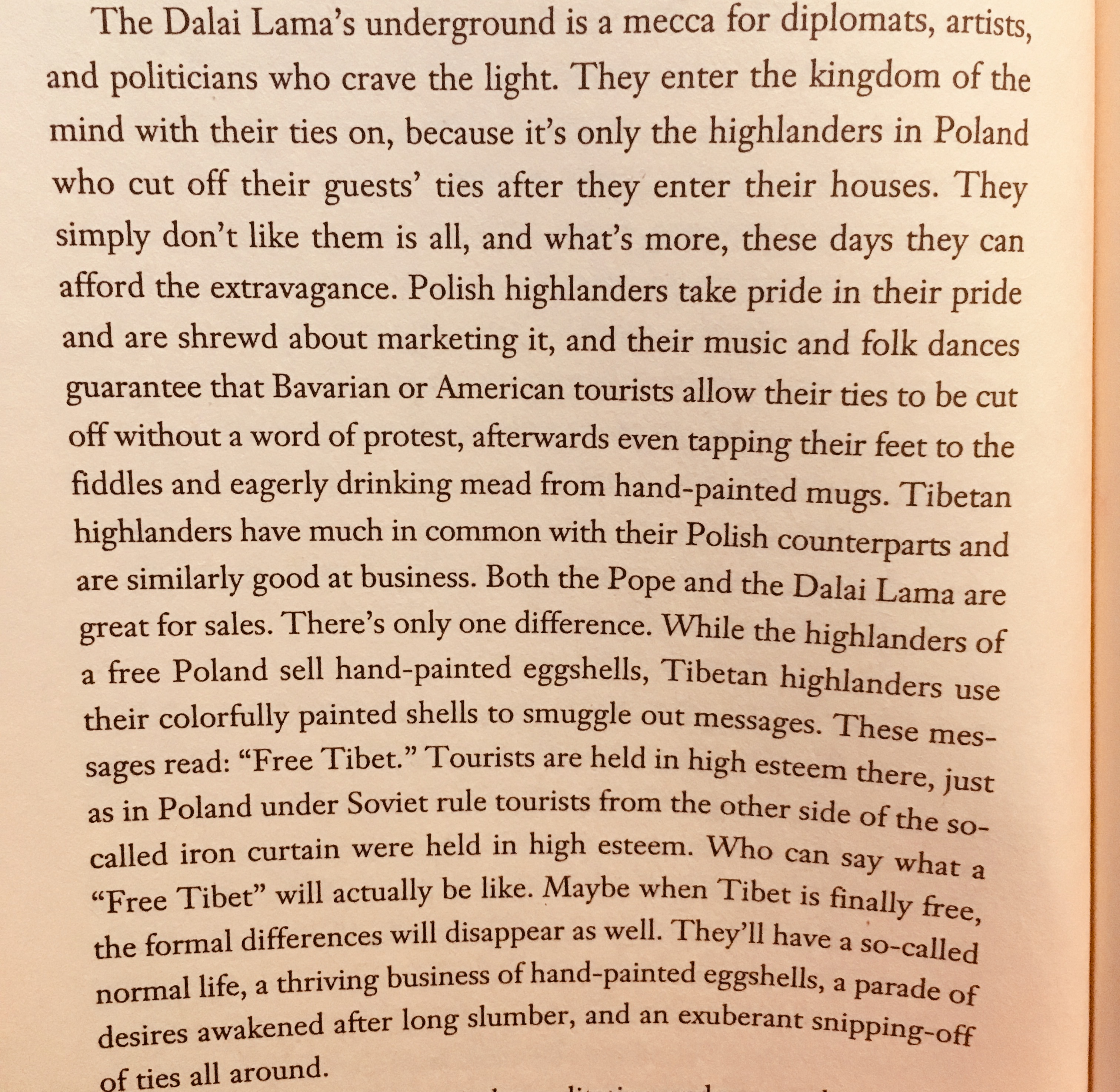
Farewells to Plasma by Natasza Goerke is bloody brilliant. Playful and mind expanding short stories. Maybe my fav surrealist short story writer. Along with Leonora Carrington. I want more!
-
This prose poem/flash fiction, entitled “Feast Day,” from my book The Green Monk (Boiler House Press 2018), is about the anticipation of the feast day. There are many feast days. You can create your own. Leonora Carrington and Salvador Dali liked to mix surrealism and food. It is a good mix. This prose poem is only in anticipation of the food slash surreal feast. It is part of the uncanny part of surrealism, since zapiekanki are not at all surreal, they are very common, and also very good. This flash fiction/prose poem was written a few Christmas’s ago. Near the old horse stalls, at a famous roundabout of zapiekanki in Kazimierz, the old Jewish quarter in Krakow.
-
What is that big ball of energy? Is it alive? What is alive? Here is a prose poem from my book The Green Monk. It is all about the sun.
-
I’m honored to announce that my story “Jitters” has been nominated for inclusion in Best Microfiction, 2020. The Best Microfiction anthology series considers stories of only 400 words or fewer. Co-edited by award-winning microfiction writer/editor Meg Pokrass, and Flannery O’Connor Prize-winning author Gary Fincke, the anthology will have Michael Martone serve as final judge. Best Microfiction, 2020 is scheduled for publication in spring 2020 by Pelekinesis Press. “Jitters” appeared in Litro Magazine. Thanks, Catherine McNamara, flash fiction editor of Litro Magazine, for the nomination.
Image: “Matrix” by Aleks Klepnev is licensed under CC BY-NC-ND 4.0
-
A collaboration between the Polish artist and writer Grzegorz Wroblewski and the South African artist Doris Bloom, at the Warsaw Literary Museum, takes as it’s starting point The New Colony (2003), an experimental treatise/novel/play, in the tradition of Kafka and Beckett. Both Bloom and Wróblewski are immigrants to Denmark and their work probes “the endless vibrations of identity.” They share a similar “philosophical approach to simplicity and interests hinged to the limits of the human condition and its topicality” (Doris Bloom). “Both artists resort to strategies and gestures that can be associated with tachisme, calligraphic painter, matter painting or action painting” (Wojtek Wilczyk). Their art is nomadic, spoor-like, with layers, trails, and traces. Their collaborative exhibition is “a tale about the human brain and its history” and it is also “their planetary message” (Wróblewski).
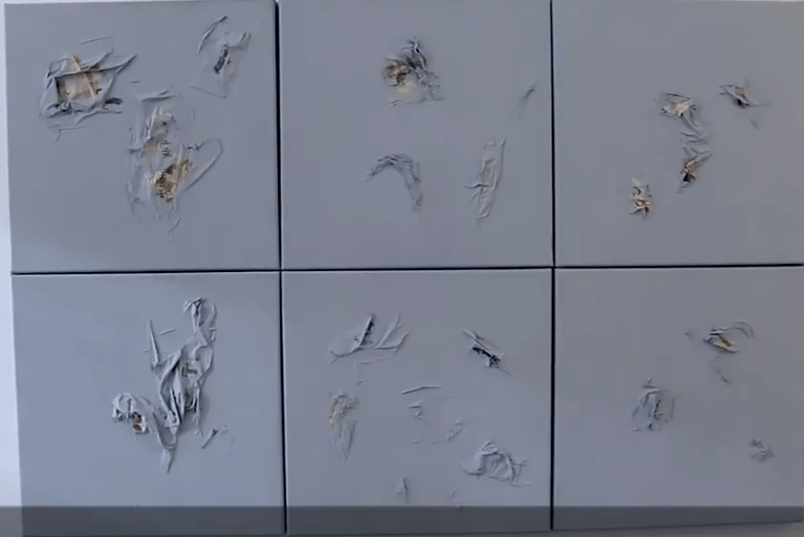
Artist: Grzegorz Wroblewki -
I am teaching an online class, in March 2020, for the The Poetry School in London. The nature of life is change and clinging to the illusion of permanence often leads to suffering, of one kind or another, but rather than anxiety, this life, full of change, can become a source of joy and wonder. Nomadic surrealism, with its emphasis on journeying between worlds, without clinging to a fixed position, is also a source of change and wonder, seeing the so called banal and everyday as full of mystery, if we can just attend to it with fresh eyes, a beginner’s mind. This studio course will be a journey, together, through change, loss, joy, and wonder. Come join us, wherever you are in the world, the more the merrier.
-
I don’t like to sell. Perhaps you are a seller. I am not a good seller. Long ago, at Matrixx Marketing I was a seller, but I am no longer a seller. I am not motivated by numbers and targets. Others, I am sure, are motivated by numbers. Looking back, selling accidental death insurance, all those hours on the phone, recording my bowel movements, reading back rebuttals, I am glad I am no longer a seller, especially on the phone. I don’t like the phone, although I appreciate that it exists and is sometimes helpful. Here is an excerpt from my novel about selling on the phones. The novel, Never Mind the Beasts, is forthcoming from Dostoyevsky Wannabe in April 2020, after ten years of tinkering. It is the first book of my nomadic surrealist trilogy. This excerpt is very short, because we like short, it is about selling and managers and miniature gorillas. Perhaps you have your own miniature gorilla too!
-
A surrealist poem from the Serbian poet Ljiljana Đurđić. Ljiljana Đurđić has published three collections of poetry, including Swedish Gymnastics. She is also a terrific translator of Sylvia Plath.
“Lucifer” by Serbian poet Ljiljana Đurđić. Image: Claude Cahun, surrealist artist. -
The Little Shop of Horrors, a classic from America, about an accidental mass murderer, feeding humans to a plant, from my novel in progress, The Dreamlife of Honey.
-
A Sunday flashback. A wee reading, from my book Rides (2014), with cut ups and collages, straight from the heart and shuffled from the surrealist deck of cards called life.
-
My prose poem, “Flora and Fauna,” part of my nomadic surrealist novel The Dreamlife of Honey, the third in a trilogy, still in progress, just published at OPEN: Journal of Arts & Letters. Based on experiences teaching English in Bielsko Biala, Poland. Many years ago. etc.
“Flora and Fauna” by Marcus Slease. From Eski Yeni, a novel in progress. -
Super happy to have my surreal prose poem “Horses” (inspired in part by Leonora Carrington) nominated for the Best of the Net. Thank you Bear Review!!
-
by Charles Baudelaire
-
This prose poem was written in the mid-seventeenth century by the Spanish Jesuit priest, scholar and philosopher Baltasar Gracian. It is taken from the book A Pocket Mirror for Heroes (trans. Christopher Maurer).
-
From The Doll’s Alphabet, by Camilla Grudova, Fitzcarraldo Editions. A fantastic collection of stories, with hints of Margaret Atwood, Angela Cater, Richard Brautigan, and Leonora Carrington.

-
Super happy to have an excerpt from my forthcoming novel Never Mind the Beasts (formerly The Autobiography of Don Whiskers) in the new issue of Plaster Cocktail: Invisible Monsters. Thanks to the editors Polina Riabova and Stephanie Maida for including me in this fab issue. Cathartic art and reading!
The novel is coming out in April 2020 from Dostoyevsky Wannabe.
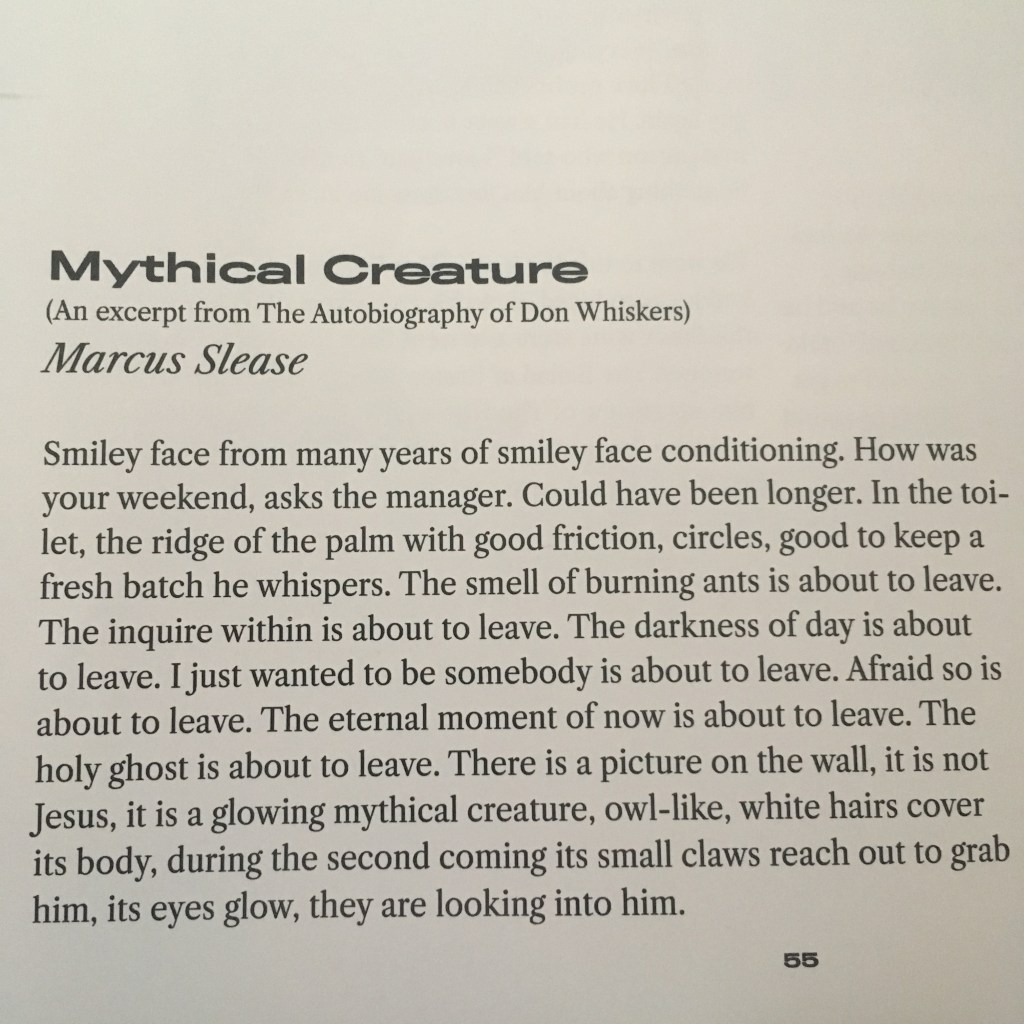
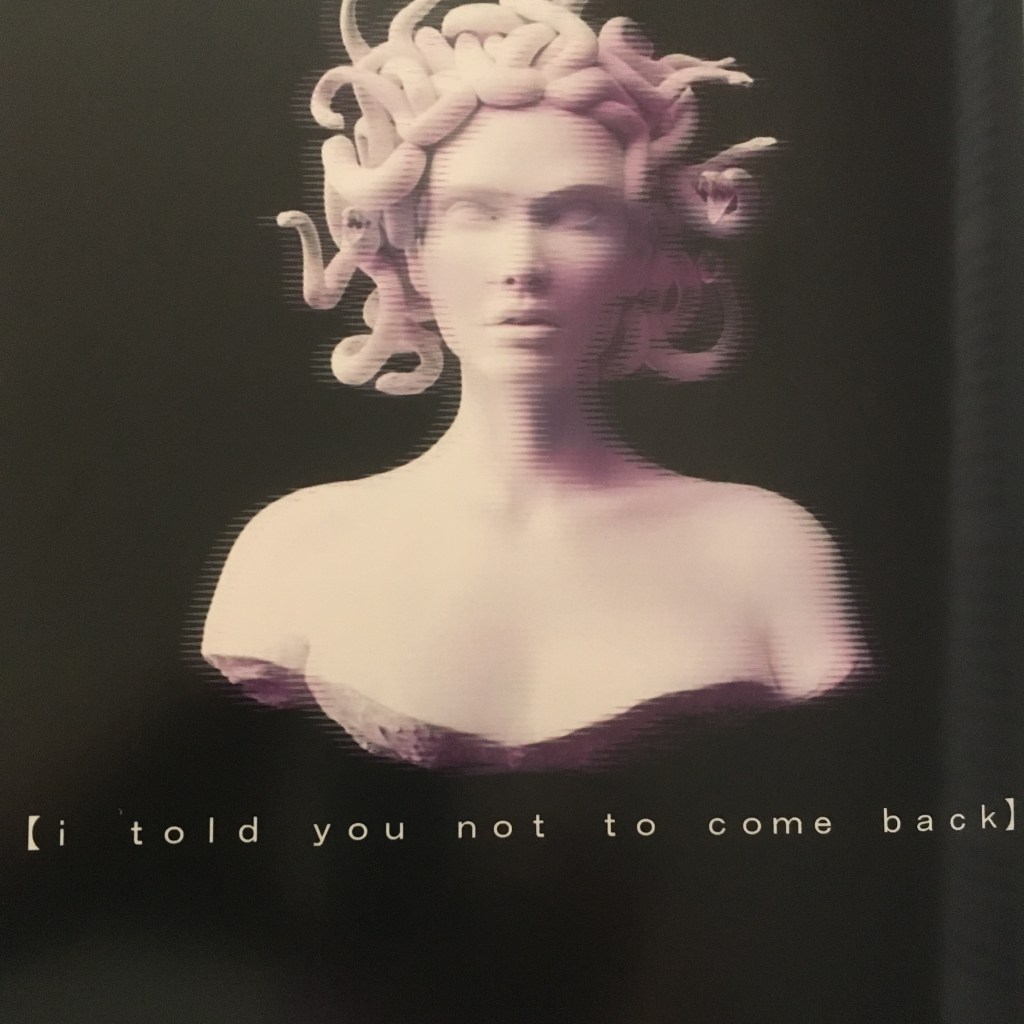
art by Sierra Ortega -
This is a very brief excerpt from the opening of my new hybrid novel in progress: Squid on the Barbie.
What is relationship between your environment and happiness? Influenced by the classical philosophy of the Epicureans and Buddhists, as well as the revolution of the surrealists, Pineapple and Don Whiskers move to Spain for a more simple existence. How can they reconcile traumatic pasts, in Poland and N. Ireland, with their new life in Spain? This is their love story. A revolution of everyday existence. Inspired, in part, by Italo Calvino’s Invisible Cities, as well as the playful surrealism of Leonora Carrington, and the expansive minimalism of Lydia Davis, Squid on the Barbie is a nomadic surrealist journey, from countries and states of being, magic and alchemy, a novel of vignettes, travelogues, flash fiction, and prose poetry.
Squid on the Barbie is the third novel of a trilogy. The first novel, Never Mind the Beasts, is being released in April 2020 by Dostoyevsky Wannabe.
(art: Maria Cerminova Toyen, “Fardée pour Apparaître,” 1962.)
-
“Wolf-ancestry” by Vakso Popa. Reading: Marcus Slease -
Poem: Aleksandar Ristović. Reading: Marcus Slease -
Poem: Vasko Popa. Translation: Charles Simic. Reading: Marcus Slease. Images: Dora Maar & Claude Cahun
-
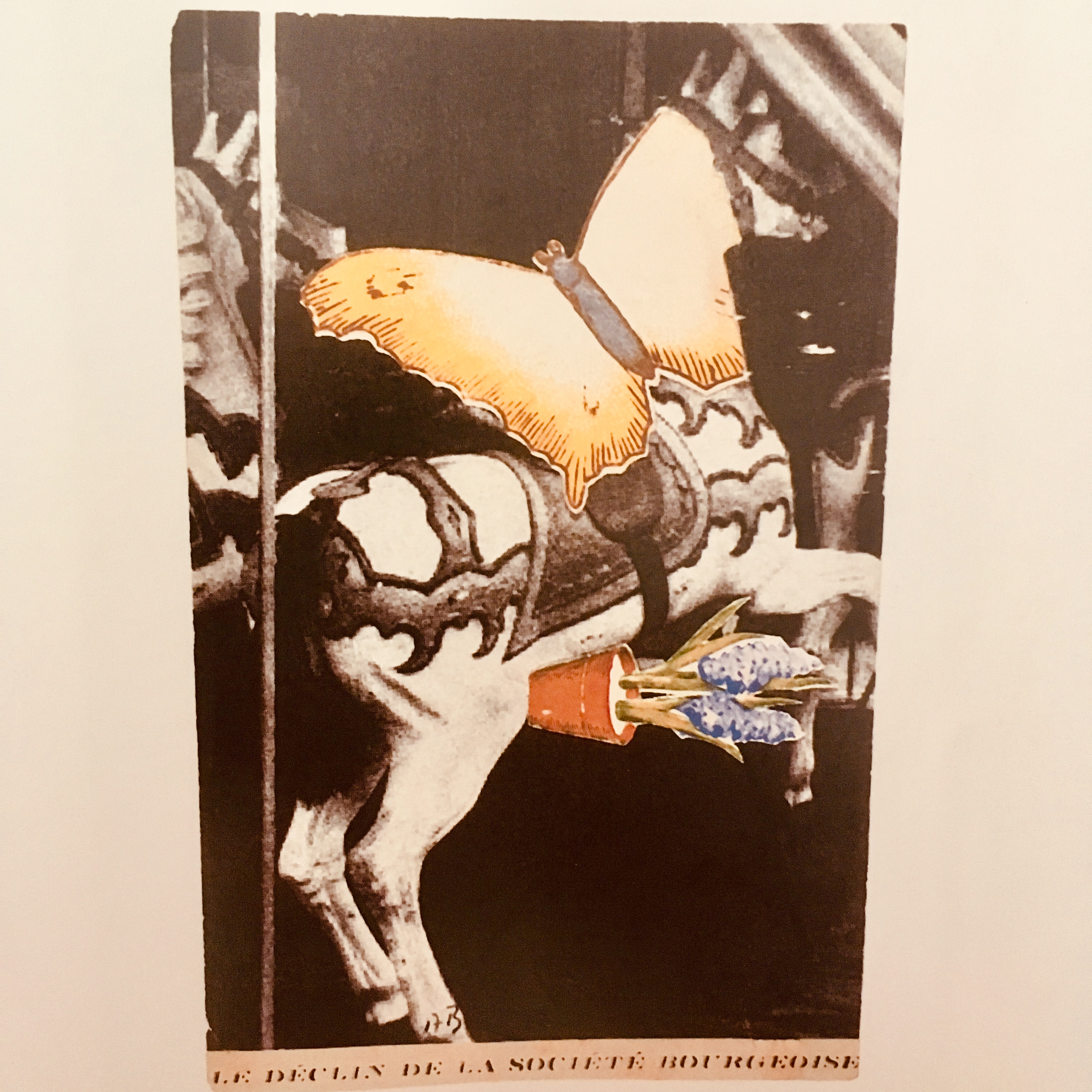
By Andre Breton. 1935.
-
A fairy tale for numbers by the poet Vasko Popa. Terrific nighttime reading.
-
Falling in love, more and more, with Vasko Popa. His selected, translated by Charles Simic, is terrific.
(Background Music: Jimmy Giuffre’s “Scootin’ About” & “Cry, Want.”)
-
A story about cosmic evolution, romance, beards & shaggy carpets. From my book The Green Monk. “Where is your black hole? Only survival of the fittest. Black holes.”
-
Terrific review by Tom Jenks of my book The Green Monk. You can read it over at Stride magazine. Lydia Davis, Daniil Kharms. Yes please!
The Green Monk is available from Boiler House Press. It has a very nice design. Good to touch. And also read.
-
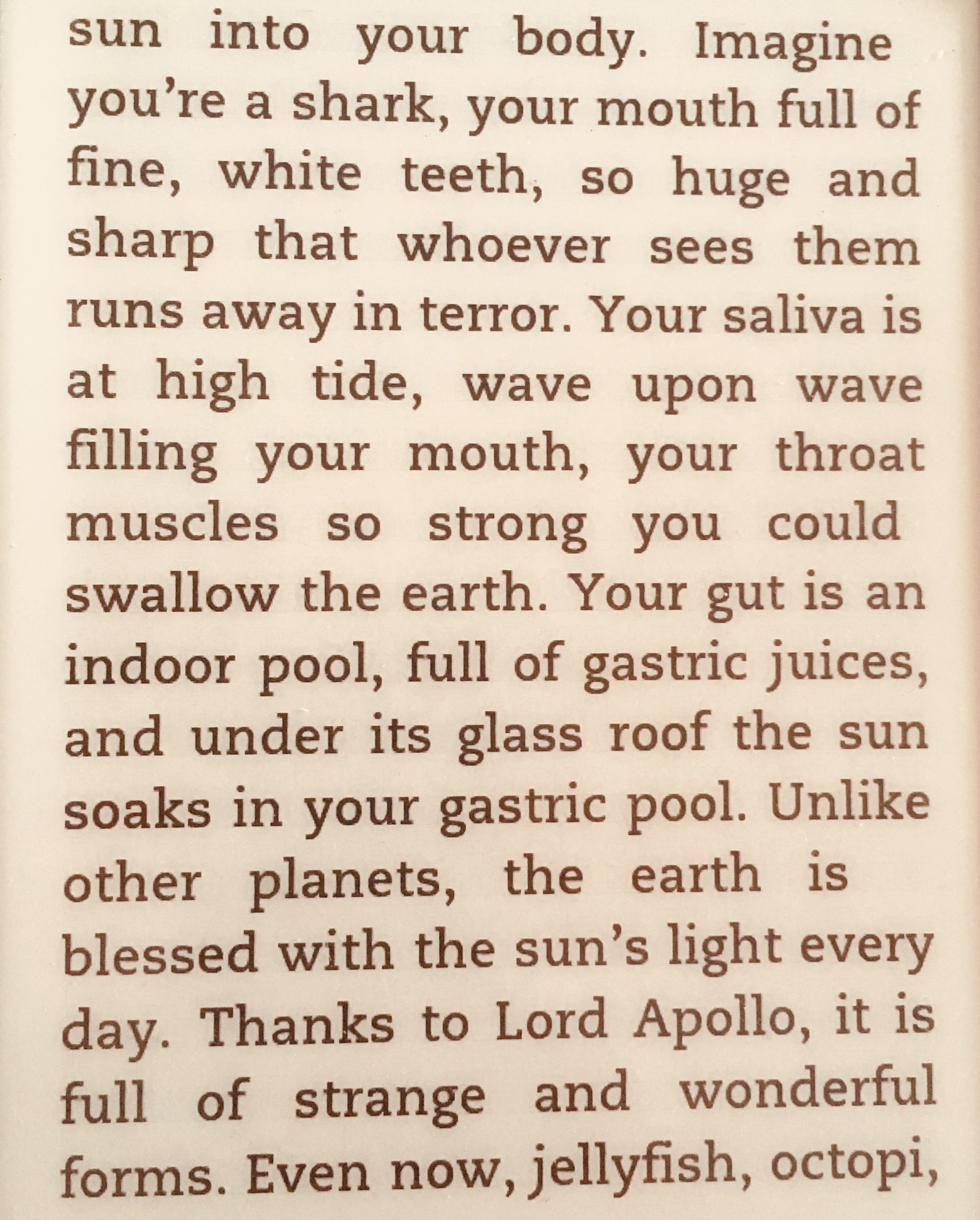
Saliva at high tide. The sun soaks in your gastric pool.
From The Emissary by Yoko Tawada.
-
This is a song from my Irish childhood called chuck chuck cheese.
It has been slightly altered.
I sung it three times with different types of altered voices (high, deep, child’s voice) then combined them into one track and added old Freudian cartoon to go with it.
You can listen over here:
-
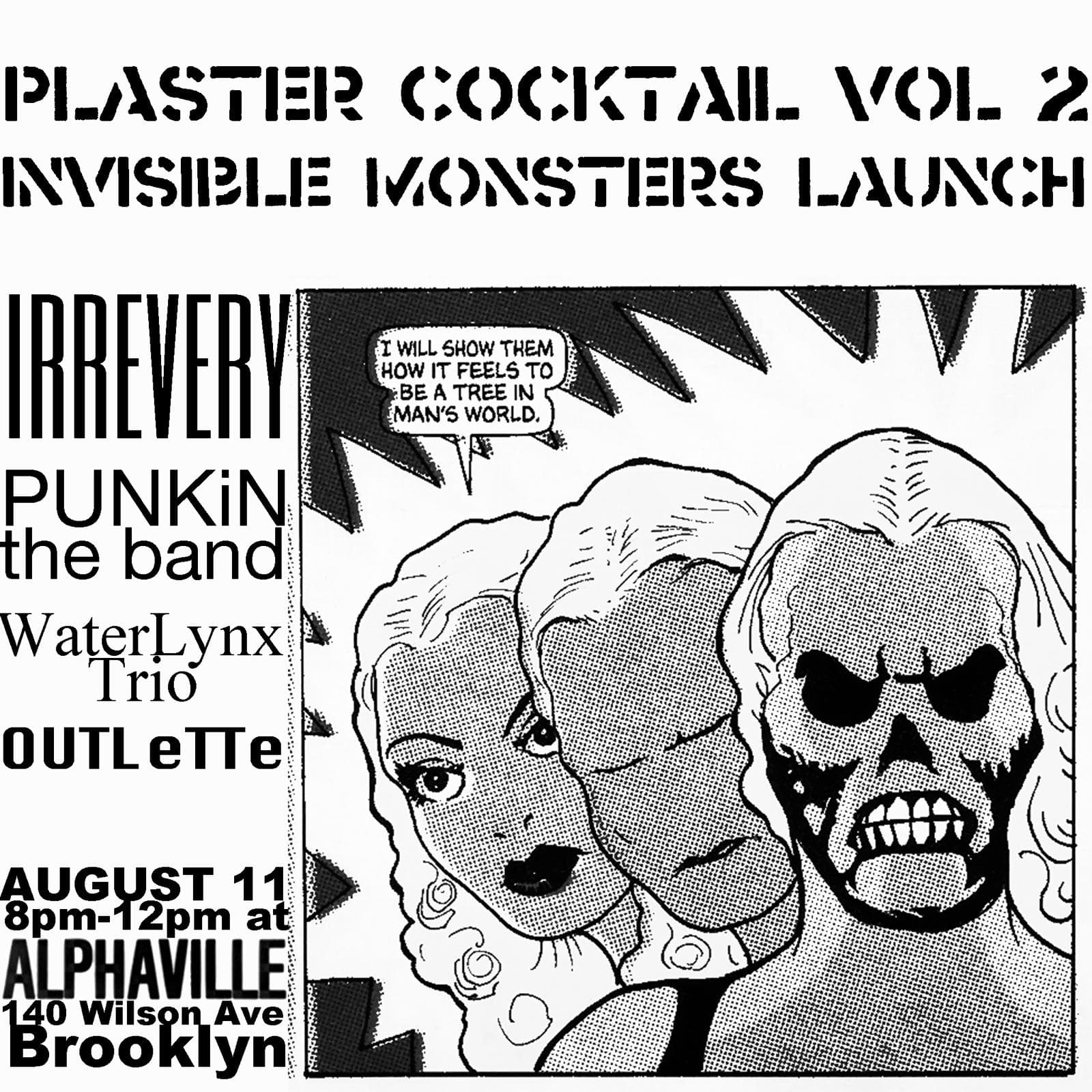
I have a flash fiction invisible monster in new issue of Plastic Cocktail. Plastic Cocktail is in Bushwick. Bushwick is in Brooklyn. Brooklyn is in New York City. Someday maybe I will see Bushwick. I have seen New York City, but it was mostly in the movies.
-
From my new novel in progress for the summer. It’s called The Dreamlife of Honey. Here is the current description:
From the over-stimulation and financial stresses of London to a slower life in Madrid and Barcelona, Don Whiskers and Pineapple are ready to live simply with less ambition. What is the relationship between your environment and well-being? In a world of fractured attentions, how to find focus and live peacefully? A novel about time and ageing, slowing down, looking back to move forward. Peaches is informed by Epicurean philosophy and the wisdom of living. A total art.
-
by Pablo Picasso, 12th September 1937. From Pablo Picasso: The Burial of the Count of Orgaz & Other Poems, edited by Jerome Rothenberg & Pierre Joris, Exact Change, 2004. -
Here is story, from Leonora Carrington, about carnivorous rabbits. And more.
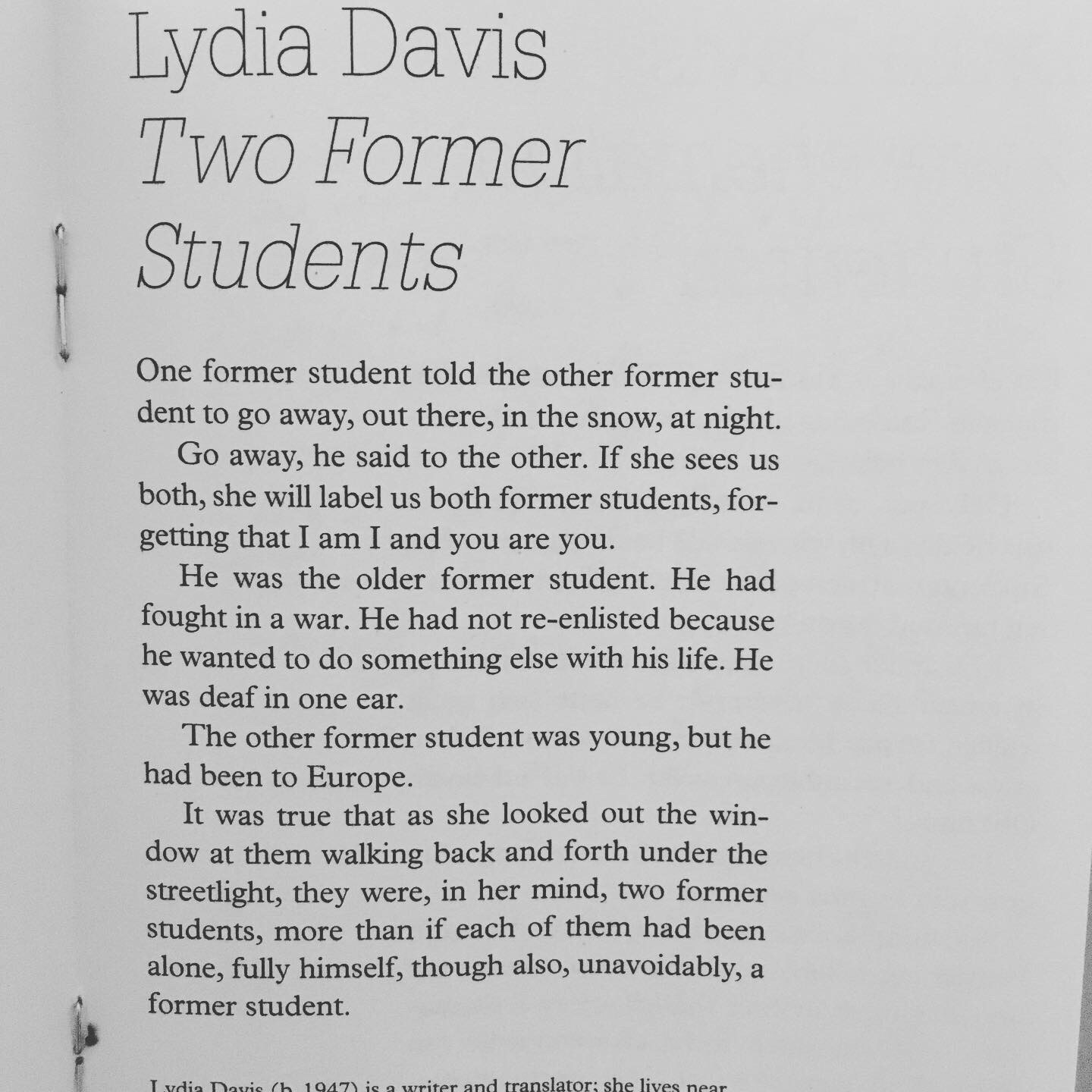
 Never Mind the Beasts