Never Mind the Beasts

Website of surreal-absurd writer Marcus Silcock

  • from Play Yr Kardz Right, Dostoyevsky Wannabe, 2017.

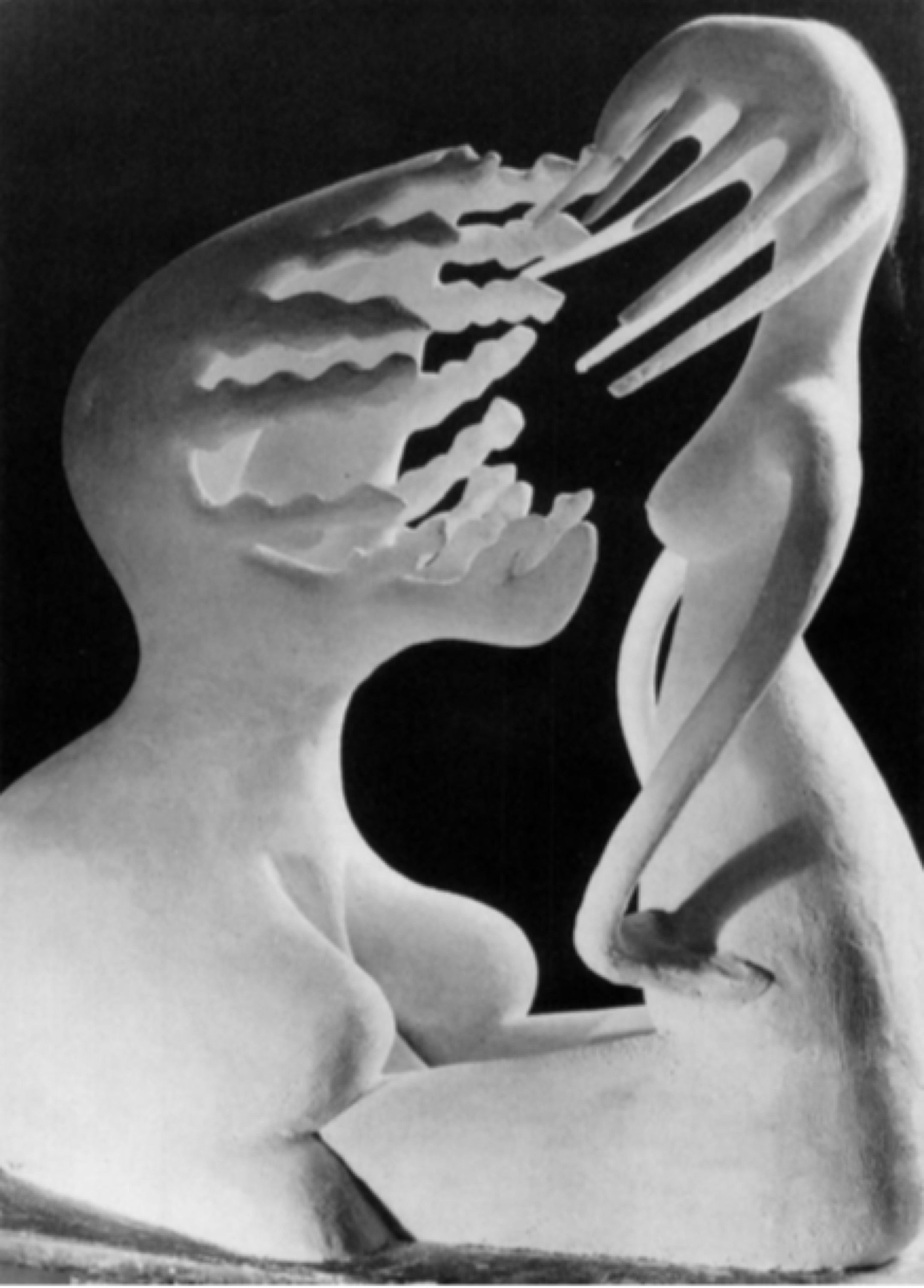
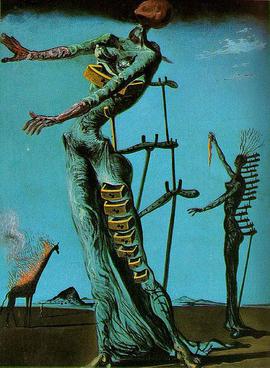
    Image: Trilogy of the Desert, Salvador Dali, 1946.

    Dali painted The Trilogy of the Desert shortly after moving to the United States in 1946. The desert was new to me, as an immigrant in America, from Northern Ireland to the Vegas desert. Snakes, also new, since St. Patrick chased them out. And also legs, since I was just turning 12 with new hormones, and also becoming a runner. I am no longer a runner of the desert. It was a good place to be, temporarily.

  • by Aimé Césaire (trans. Mary Ann Caws).

  • Except from Paris Peasant, by Louis Aragon. A French surrealist classic. Pg.55-56. English translation by Simon Watson Taylor.

  • “Brooms” by Charles Simic. Performed by Marcus Slease.

  • A collaborative poetry experiment for the anthology Original Plus Dub (Hesterglock Press, 2019) edited by Paul Hawkins and Richard Skinner. The premise: to work with a collaborator (Richard Brammer), each producing an ‘original’ (text/poem/artwork, etc.) then swap works and ‘remix’ each other’s original piece. Here is one of our colloborations. It is called “Autechre.” The original is by Richard Brammer and the remix/dub by Marcus Slease.

  • (Art: Hieronymus Bosch. From Garden of Earthly Delights.

  • From book of stories in progress. This one is called “A Mask of Rubber Bands.”

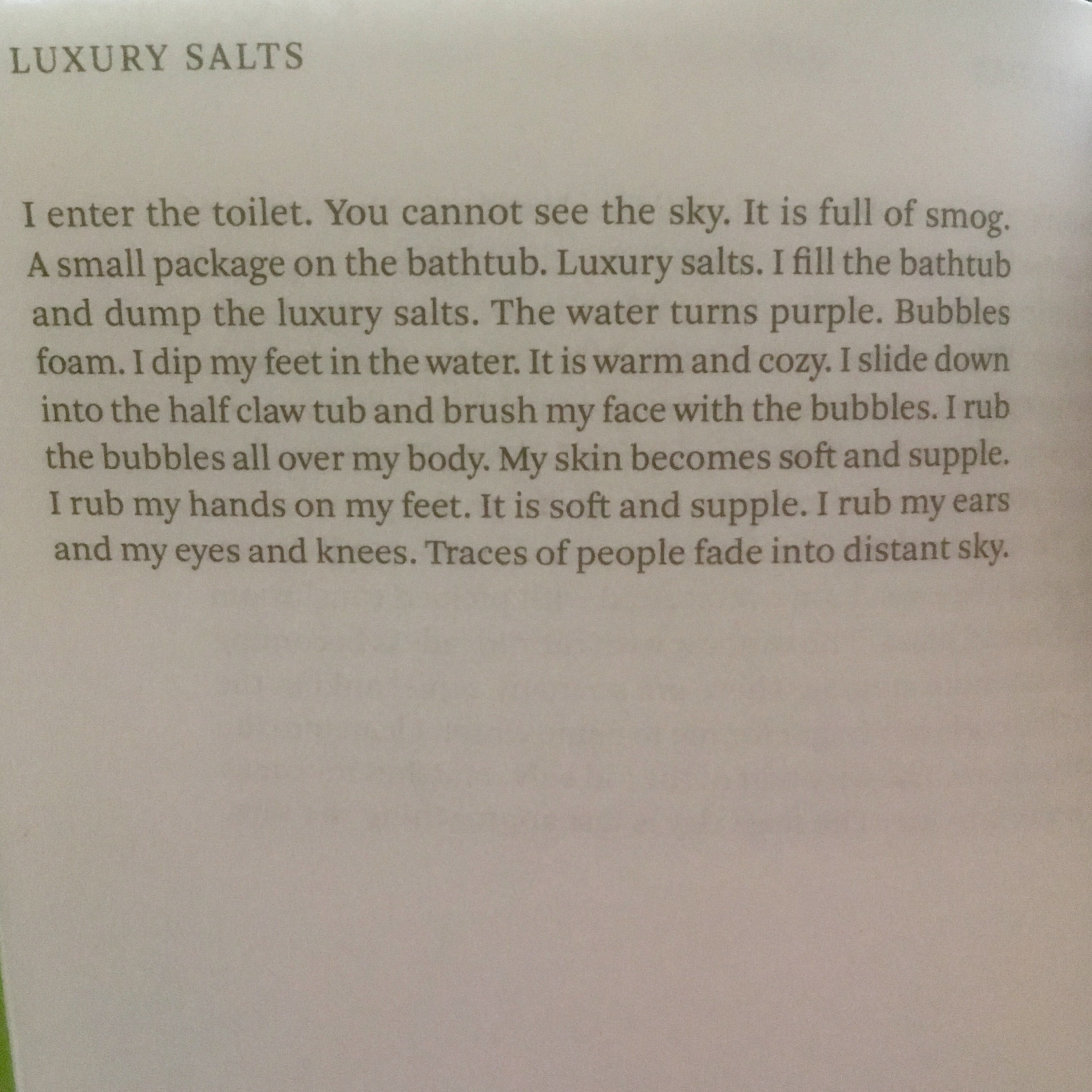
  • The Spirit of the Bathtub is a limited edition. You can grab a copy until 1st June 2019. Here is a description of the nomadic surrealist journey:

    Experience surreal tales from the bathtubs of South Korea, Utah, Turkey, Italy, Poland, and London. Vibration therapy with Spirit monkeys. Trying to define yourself is like trying to bite your own teeth. The emotional weights are shifting. Dancing and acrobatics in the multi-verse. It is an expansive big bath person. It is the miracle that dissolves in the bathtub like a lump of sugar. Welcome to the lesser lights of the bardo. In the milky clouds of the bathtub you will never be sober. Hello my old friend. Tune into signals from another universe. It looks just like this one.

  • A small sample from Vicente Huidobro’s Altazor. So much magic. It is easy to get lost in there. The best kind of traveling.

    (Painting: Miguel Hernadez. Music: Minor Victories. Reading: Marcus Slease)

  • A small excerpt from my novel in progress, Never Mind the Beasts. This is the early 80’s, on a government housing estate in Milton Keynes, England. Don Whiskers is baptised into a new religion. Learns how to swish whiskey. Becomes a friend of Jesus. Tries to find a hammer. Acquires a Millennium falcon. He is not a rock star.

  • Kyoto. Spiders. Men in black coats. Minimalist existentialist prose poems by GRZEGORZ WROBLEWSKI

    (Painting by Janusz Tyrpak. Drawings by Grzegorz Wroblewski.)

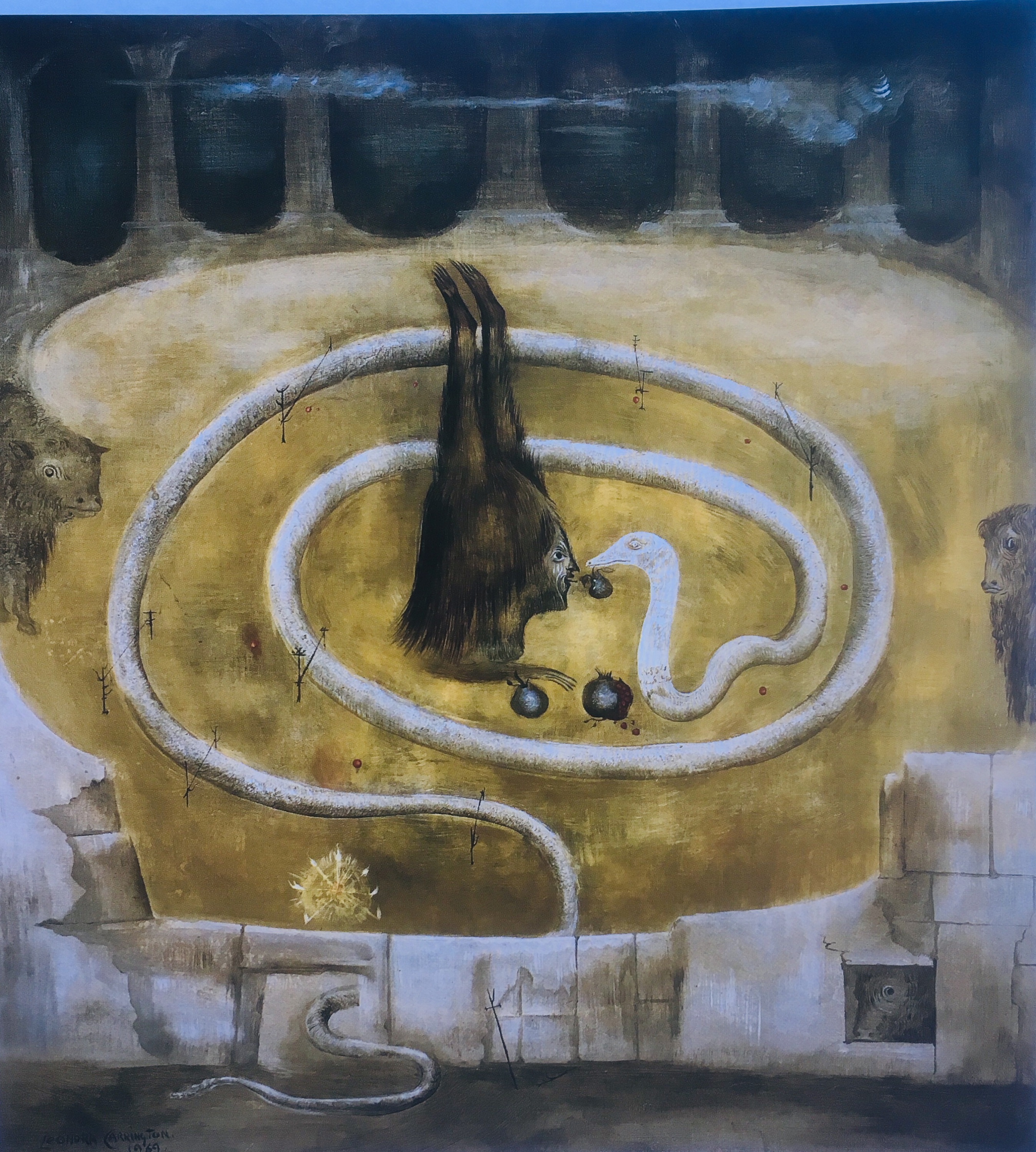
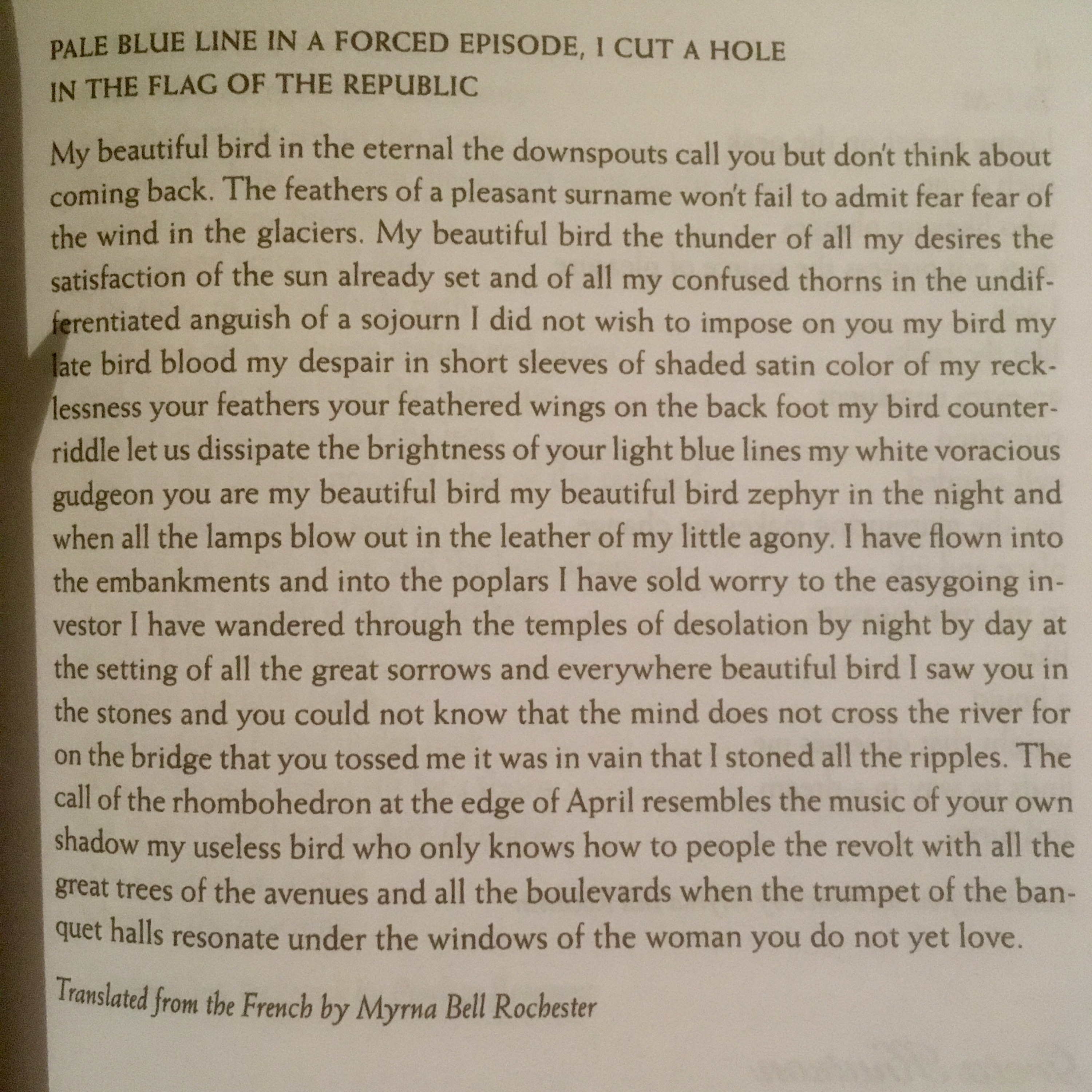
  • 1969. Leonora Carrington.

  • A excerpt from my second novel in progress, Hermit Kingdom. This section is called “The Lover’s Nest.”

    Polish sailor pubs. Rustic jazz clubs. Vibrating Pineal glands.

    Self-branding, love and companionship,

    monsters, MILFS, and satanic energy drinks

    Nomadic journeys from Katowice to Madrid to North Carolina with beer butt chicken and pimento cheese sandwiches.

    How to expand with it.


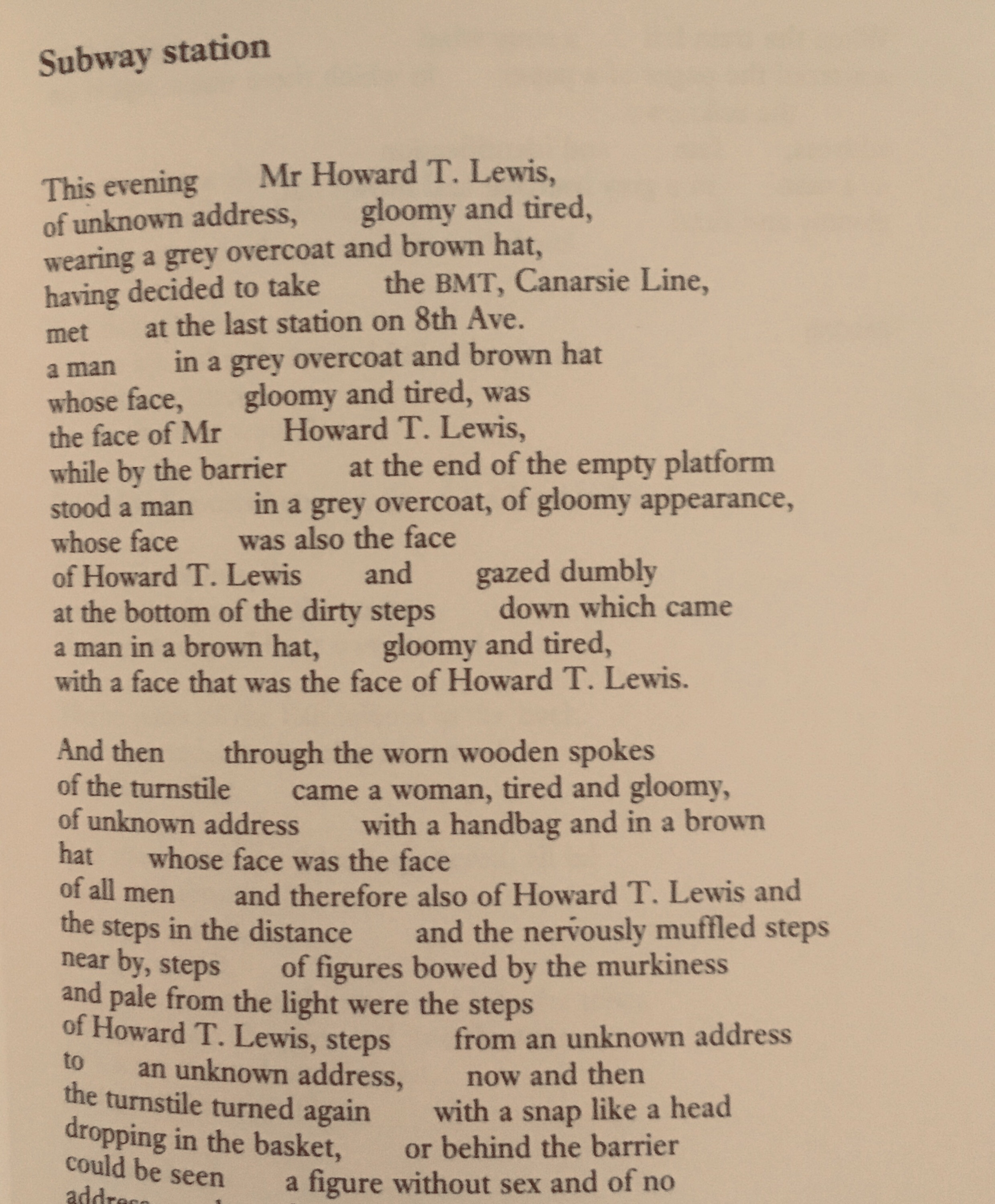
  • “The Subway Station” by Miroslav Holub, 1970. “Ornithology” by Bud Powell. Reading by Marcus Slease.

  • by Miroslav Holub. 1970. Trans. Ian & Jaramila Miller

  • From my 1st novel in progress, Never Mind the Beasts. This excerpt from the section “Howling Dogs and Crinkled Whispers.”

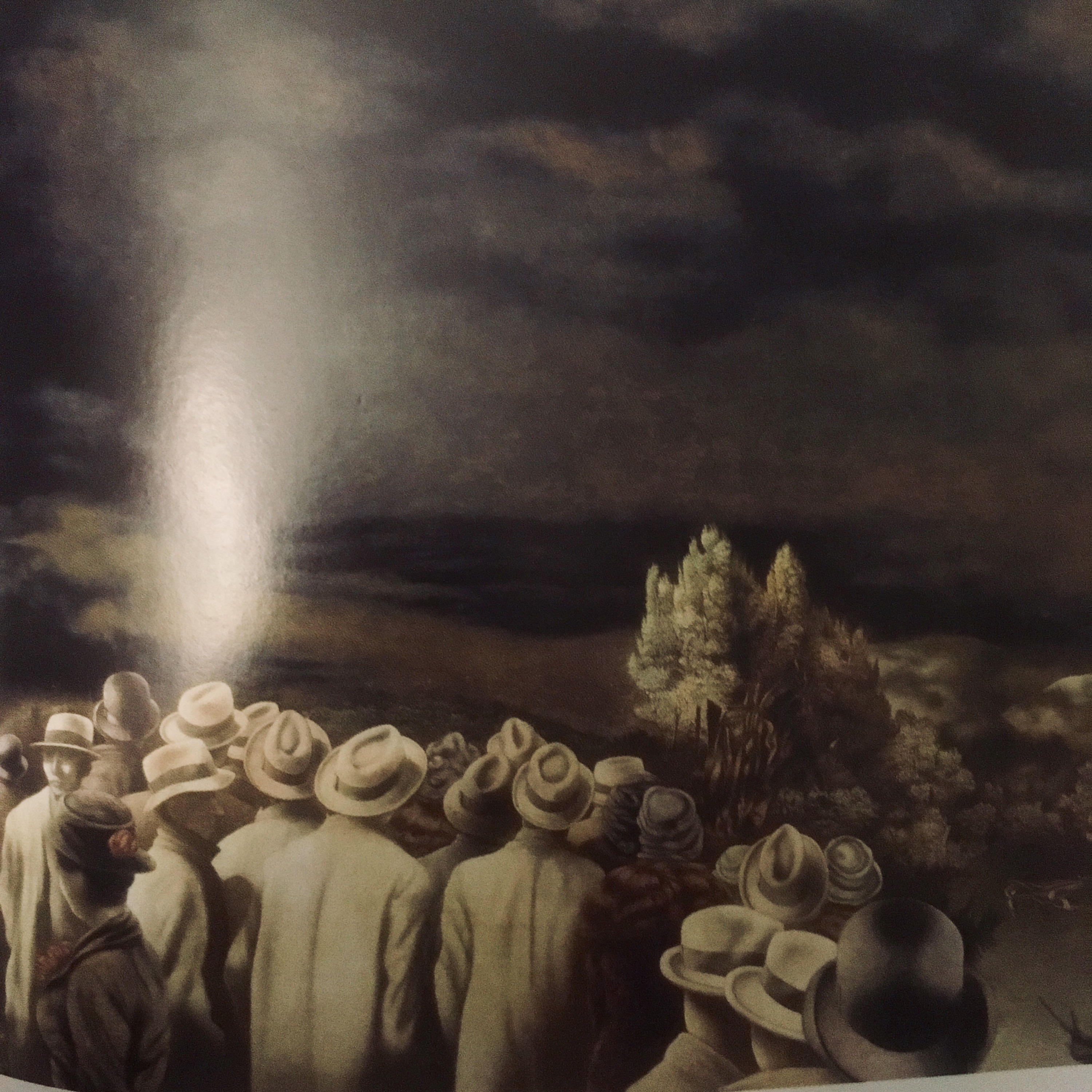
  • by Richard Oelze, 1935.

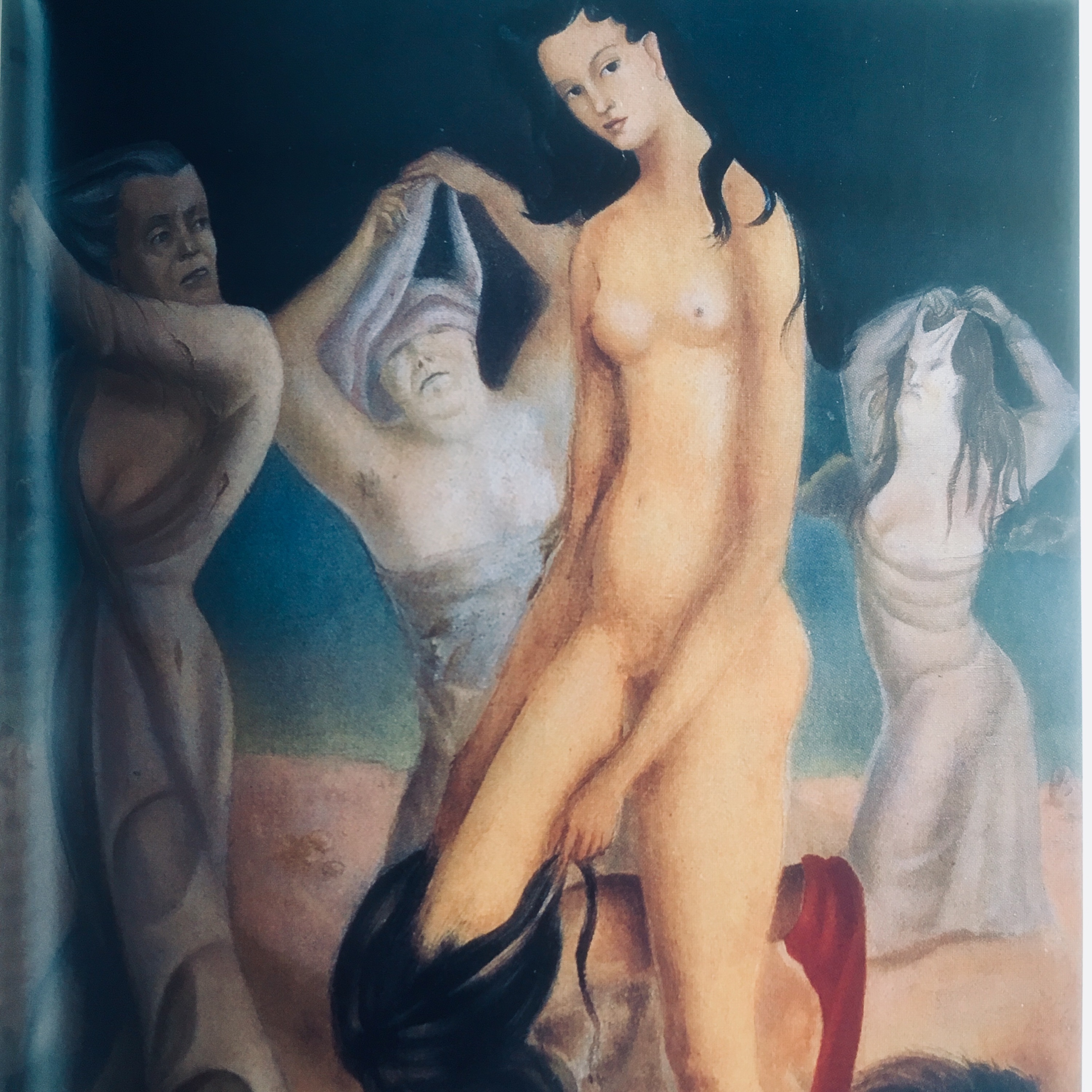
  • by Leonor Fini. A sylphlike figure, a voyeuristic dialogue. Lurking behind the perfect figure, old hags contorting themselves into lascivious gestures.

  • Fernando Pessoa’s Book of Disquiet. June 20th 1931. A hut or a cave by the sea? How does our slavery weigh upon us? The monotony of everyday existence. Most of life is maintenance. The nothingness that is everything. How to be freedom?

  • Fantastic Art has been with us since the beginning. The birth of consciousness. Again and again.

  • “A part wants to break away from the other part. The part that wants to break away claims a different culture. How many cultures make the whole. Who are the true people from the part that wants to break away and the true people from the part that believes in the whole.| My flash fiction, Jitters, at Litro today. Chosen for Flash Fiction Friday.

    (image: Frank Moth)

  • Some excerpts from my novel Never Mind the Beasts (formally The Autobiography of Don Whiskers) in the new issue of Dream Pop.

    “In Milton Keynes, during the conversion, they watch E.T. with the branch, the branch is a small gathering, if it is a larger gathering it is called a ward, they don’t have a ward, they have a branch, it is a bootleg copy and the sound is not fully synced.” Read more over here:

  • From 8 year novel in progress, Never Mind the Beasts (formally The Autobiography of Don Whiskers). This part takes place after Don Whiskers has immigrated from N. Ireland to Las Vegas. It is the late 80’s. He feels the pull, temporally, towards the Cold War on his Commodore 64.

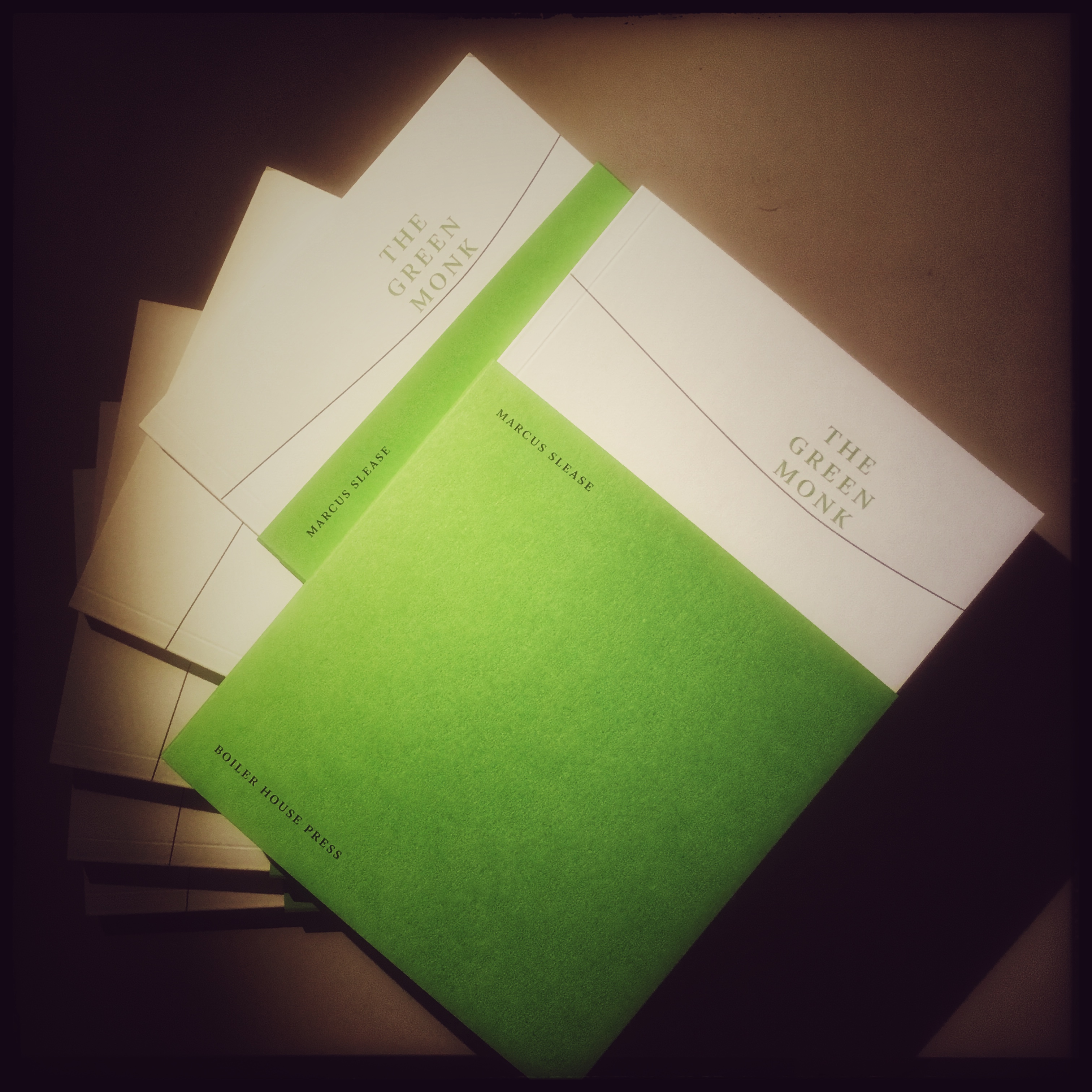
  • from The Green Monk, Boiler House Press, 2018.

  • by Jayne Cortez

  • Terrific article about the erotic art of Leonor Fini. A sexually charged lifelong revolution

  • (From Somewhere in Advance of Nowhere, High Risk Books, 1996

  • Danishness, homo-sapiens, improv jazz, interconnections, collaborations. Reminds me what matters!! Needed that. Investigative. Imaginative. Open. An interview with nomadic existentialist artist and writer Grzegorz Wroblewski

    https://www.dik.org.pl/everything-connected-interview-author-grzegorz-wroblewski/?lang=en

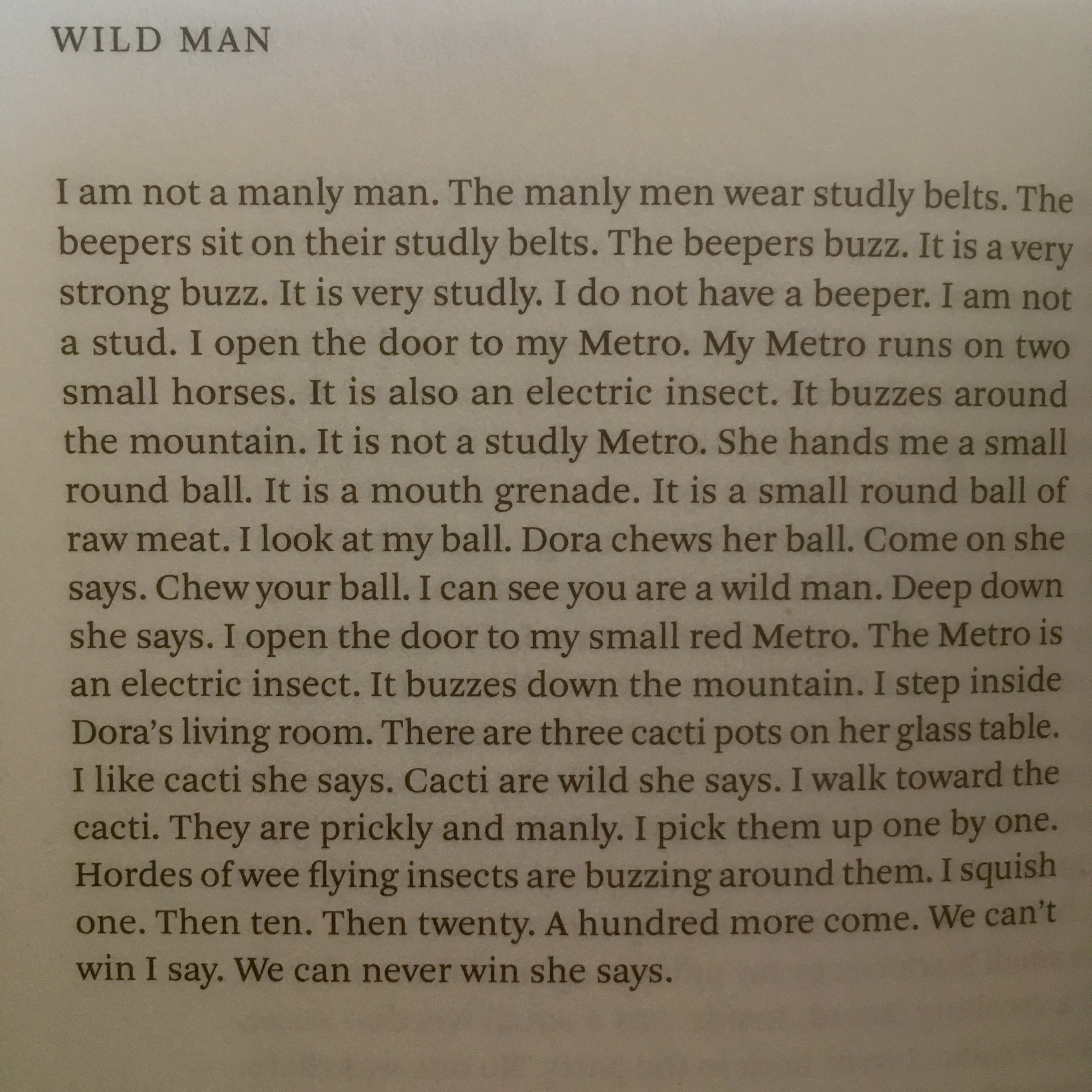
  • Are you feeling wild. Beepers were wild, especially on studly belts, in the 1990s, in Southern Utah. Here is a studly poem. From my most recent book, The Green Monk (Boiler House Press).

    (image: Nancy Baker, ‘Wild Man’)

  • from my latest book, The Green Monk (Boiler House Press 2018).

  • from The Green Monk (Boiler House Press).

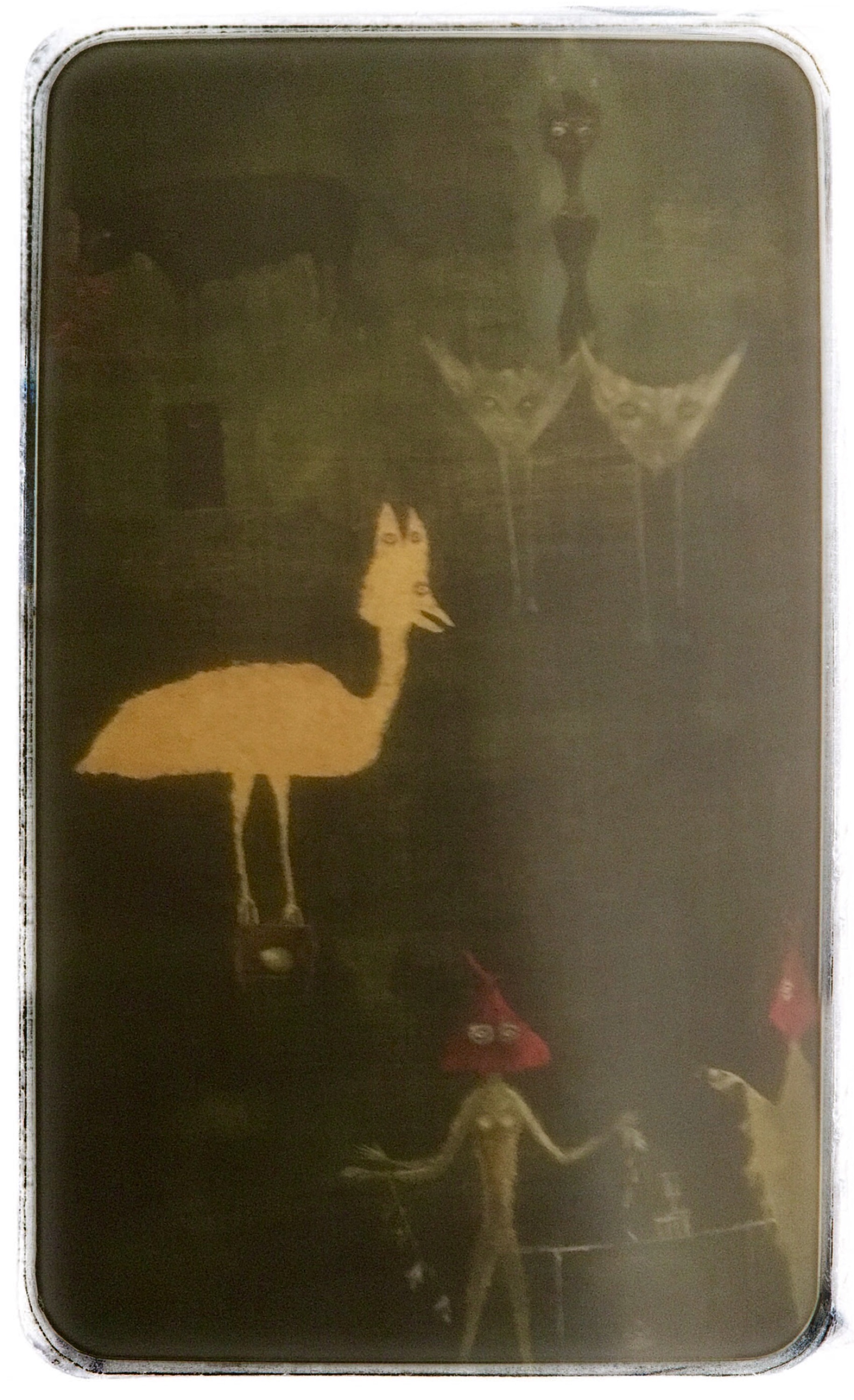
  • Leonora Carrington, 1951.

  • The first woman of African descent to take part in Surrealism, Simone Yoyotte was born in Martinique.

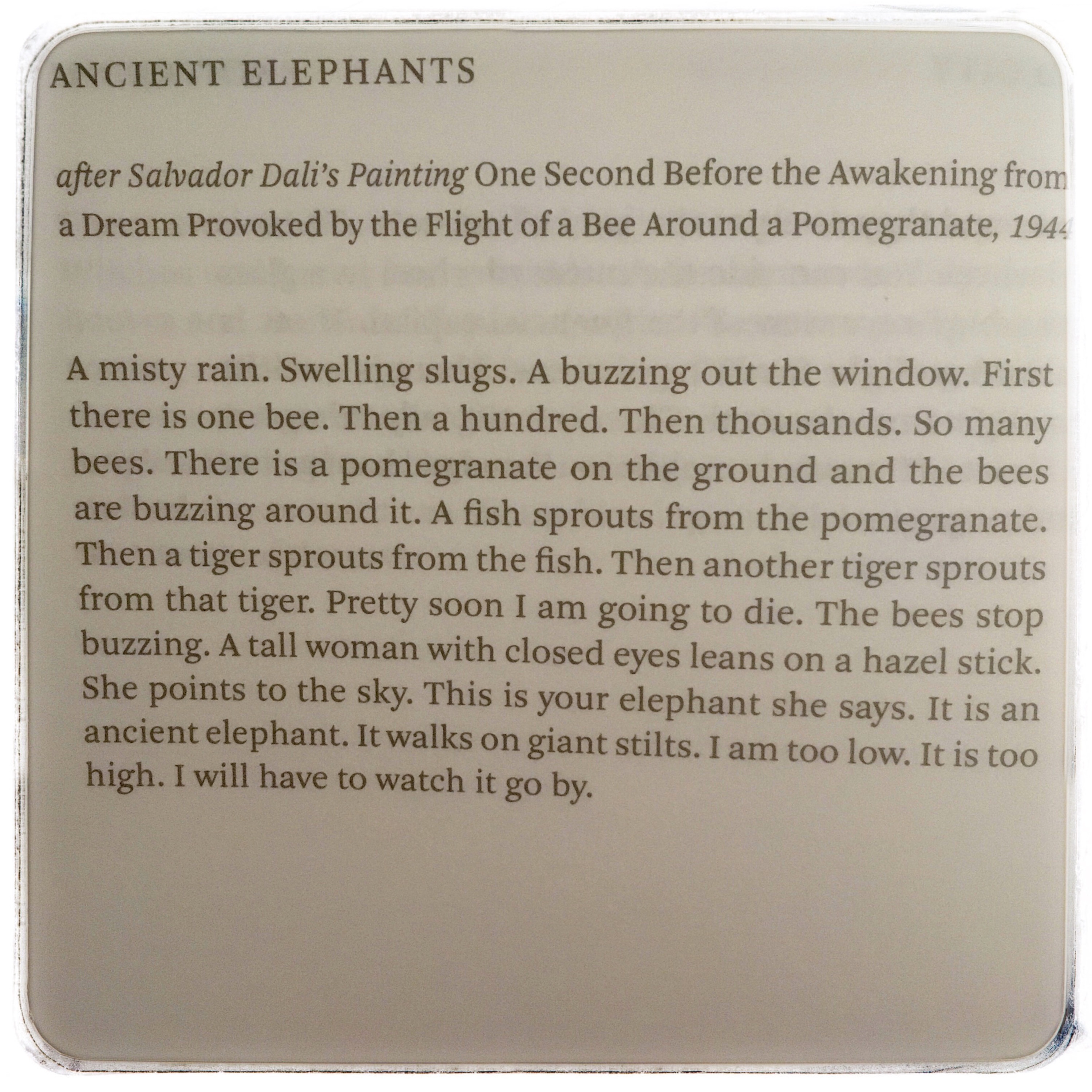
  • Ancient elephants and Dalí. From my book The Green Monk.

  • From my book The Green Monk (Boiler House Press 2018).

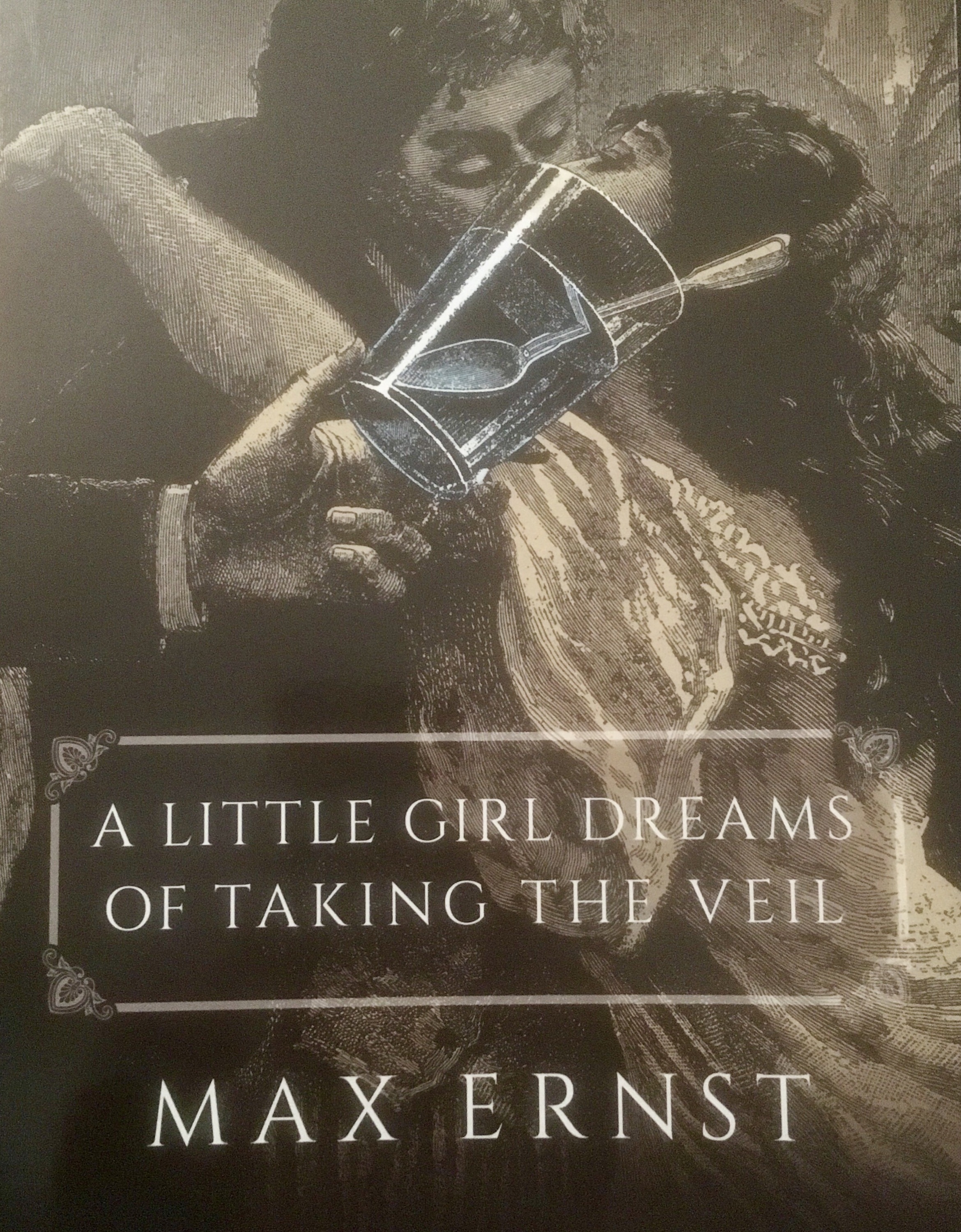
  • A collage novel by Max Ernst. Fantastic!

  • Super happy to have my book Play Yr Kardz in terrific list of books from Beach Sloth. Check ’em out over here

  • Directed by Jean Cocteau

  • A Polish Christmas poem. From The Green Monk.

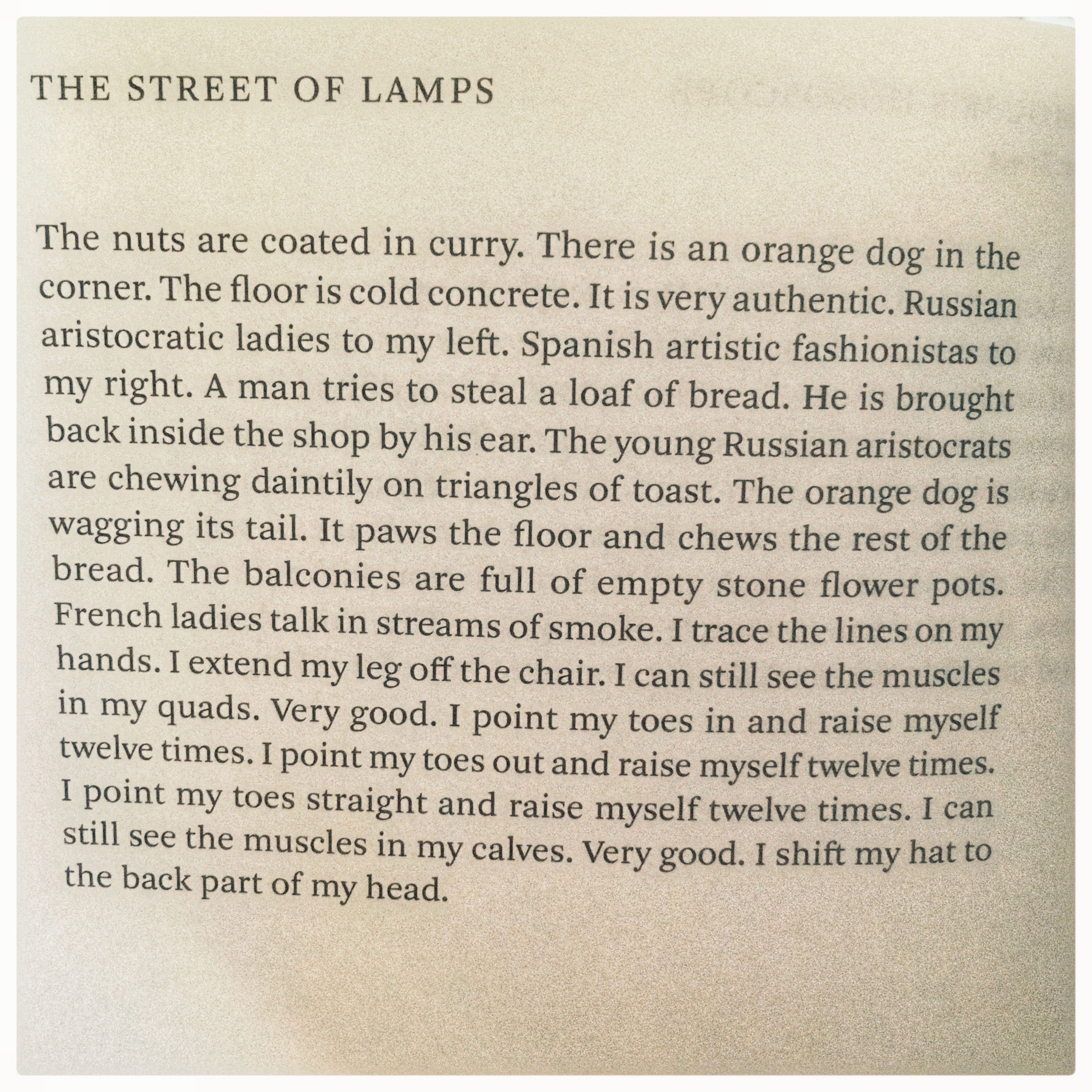
  • In Madrid there is a street called the street of lamps. It is called the street of lamps because they sell many lamps. It is also a street with cold floor cafe with sawdust and old medieval style damp alleyways with flowerpots on the balconies. I sat there, in the cafe, after wandering the street of lamps and wrote the above. It is part of my new book of prose poems and flash fictions entitled  The Green Monk.

  • One of my favs. Spectacular surrealist.

    And So On and So Forth

  • I love. Jacques-Bernard Brunius.

  • Jerry sported gold chains, even when he broke the bread, the body of Jesus, and passed the little cups of water, the blood of Jesus. It was a thin one, there were thicker ones. It was the end of 1980s, North Las Vegas. French kissing was in the air. Here is a gold chain, from my new book, The Green Monk. 

    Gold chains and French Kissing

  • There are so many. Dancers dance them. Lordly swans. Soft swans. Isn’t it time for the swans. Noise rock, post-punk, industrial and post-rock. Temperamental and beautiful. Here is a poem, from The Green Monk, about swans, written in London, in a bone cold room, during winter, warmed by swans, and the thought of swans, and also sleep, swans are the best sleep.

  • Zapiekanka? Yes please!! Here is a flash fiction, written during Christmas 2016 in Krakow Poland, in the historic Jewish quarter of Kazimierz.

    Frommy book The Green Monk. Available from Boiler House Press.

    from The Green Monk. Available from Boiler House Press.
  • When Milo opened the window more students poured in. Not long after, there were 40 of them, in a room built for 20. Don’t be a lazy bird. When the lightning struck, the computer was fried, the projector was intact, but there was nothing to project. End of lesson. No more Animal Farm. Here, said Jonathan, take your shoes off. They found a damp towel together. But it was too late, his shoes were already submerged. It would take two days to dry them.When your feet are wet it’s hard to warm your body. If the river has overflown its banks, it is best to wade barefoot. If you climb on the fence it brings the lightning closer. The lightning hit the tree and then there was fire.


    The bus stop was dark and street was dark but now and again a car would shine the lights and it was less dark, but still relatively dark. Don Whiskers wondered if the bus would arrive, and if so when. It was the eternal question. His toes were wrinkling inside his wet shoes. The faces in the holes were egg shaped. At the busstop a strappling young woman, with garters and a snake. They make eye contact, briefly, then back to looking down the street for the bus. The bus stop makes everyone anxious, storm or no storm. Will it come and when and if. Suddenly the sky opened into an egg yolk.

  • From Scenes from a Childhood by Jon Fosse. Translated by Damion Sparks. Fitzcarraldo Editions.


  • An excerpt from my novel in progress, Hermit Kingdom, is up today at Queen Mob’s Teahouse. Hermit Kingdom is interconnecting flash fictions, prose poetry, hybrids.

    International Worker’s Day 2018, Pineapple and Don Whiskers, living in Madrid, walk the walk past Cazorla, with the best tapas, and the friendly waitress, down past the death ring, to gander at beautiful feminine male peacocks in El Retiro, eat homely tastes at the only Polish restaurant in the city, where Don Whiskers attempts to talk sports with little knowledge of sports, Pineapple dreaming the great dream of weekend getaways together, the nearby desert mountains, or northern, Basque and Asturian and Galician, magical escapes into nature, but also the realities of transient work and financial realities of lower middle class living, loving and living more with less, soaking into the sun, walking the walk, traveling to wake up, even if it is only within a few mile radius, friendship and travel and sometimes, despite the realities, a little hope.


  • The Green Monk is out in the world. Collaborations with the paintings of Dali and Leonora Carrington. The green parrots of Garcia Lorca and Paul Celan. The queer erotics of swans. The mysteries of milk in Madrid. Soul suckings. Bazaars and border fluencies. Nomadic surrealist prose poems written in Krakow, Katowice, Madrid, London and more.

    And not to forget the paper, the paper and design of Boiler House Press is succulent and rich and very textured. A good addition to your collections.

    Available over here for ordering:


  • An excerpt from my novel manuscript, The Autobiography of Don Whiskers, is over at #thesideshow. Partly based on experiences in Katowice, Poland, Cercedilla (Spain), Madrid (Spain), and Palermo (Sicily). It is part of an ongoing trilogy of nomadic surrealist novels. Part autofiction, part magical realism.

    This excerpt begins in Katowice, at the Zoo, with pagan deities:

    At the back of the zoo, in the magic forest, once a year in deep night, the pagan deities are resurrected, painted faces & spooky howling, primal yelps, very good, it’s a start, it’s not enough. The zoo is full of highlights, for example, the invisible hippos, complete with diving boards and lifeguards, but no hippos, the hippos are in hiding. Also the sleeping lion, you can sit on the still warm bench and imagine the lion. The bees, however, in full force, non-invisible, landing on creamy mountains of ice cream.

    Read/listen to the story over at Five:2:One


  • Super happy to have my horse poem in the new issue of Bear Review.  It is from my book The Green Monk.

    This poem, in the new issue of Bear Review, is surrounded by many other magical poems and art, and it is a poem, in part, about the garden of eden. It was written after immersing myself in the art and writing of Leonora Carrington. Carrington is one of the greatest artists of the 20th century, and into the 21st.

    Is it also part hobby horse, from Tristam Shandy? There might be some hobby horse in there, but really it is asking for more wild horse, not the domesticated horse, although that is just one possibility. It is also whatever else you want to assign a horse.

    One thing for sure. It is definitely a poem about a horse.


  • The Green Monk is heavily influenced by Surrealist writers and painters who have lived or passed through Madrid in the first part of the 20th century. It is also influenced by nomadic surrealist wanderings around Europe. It has four movements:

    1. Built to Spill
    2. Psychic Marmalade
    3. The Green Monk
    4. Great Expectations

    Here is an excerpt from the second movement: Psychic Marmalade. Written in Alchemia (Kazimierz, Krakow, Poland). A few days before Christmas 2016.

    https://soundcloud.com/marcusslease/psychic-maramalade-from-the-green-monk


  • A nice spotlight on Dostoyevsky Wannabe over at The London Magazine by Robert Greer.

    Greer describes the presses radical approach to publishing, in both design, distribution, and content:

    “With their books retailing at around £5 each, accessibility seems to me an important part of Dostoyevsky Wannabe, and the most obvious comparison for me is the independent record label K Records in 1980s Olympia, Washington. Similarly to Dostoyevsky Wannabe, K Records ideology was based around using the technology of the day to democratise the process of making lots of art, by capitalising on the cheapness and malleability of cassette tape technology. For Dostoyevsky Wannabe, the 2018 version of this vision is to capitalise on the tools of late capitalism.”

    The books are so beautifully designed. I feel very fortunate to have my book Play Yr Kardz Right with them. A terrific press with so much creative energy. One of the centres of the literary renaissance of small presses  and record labels. As Greer says, “The common strand between all them is a DIY spirit and an experimental ethic which makes Dostoyevsky Wannabe feel less like a traditional publishing house and more a platform for innovative artists and innovative literature.”

    “There are so many that it is difficult to keep up, but it is worth keeping up with them on social media to see what they have going on. Their books are good, and cheap. Buy them, read them.”

    Indeed!

    The counter culture is alive and well. Cheap and beautiful and mind altering. Long may they live!


  • I am very happy and excited to announce my new book, The Green Monk, is now available for pre-order.

    The Green Monk is a dreambox or a sweatbox of a sugar skull. A black hole full of hairspray and cigarette butts where the deer are twitching. It is the great urn of space dust where yellow yolk drips down the wall. These poems are migration and immigration across various physical and imaginary, spatial and temporal, fields. Journeys, healings, and transformations. The illusions of self that each new self is born into.

    Written between London, Madrid, and Krakow, it engages thrillingly with various surrealist visions of artists and poets, including Leonora Carrington, Salvador Dali, García Lorca, James Tate, and Chika Sagawa. It concerns, variously, erotics, animism & magic, food, death & sublime nature, fairy tales & alchemy, & the wonders of everyday life. It is simultaneously contemporary and ancient, built on visual images and techniques of juxtaposition and collage, accompanied by entertainingly absurd narratives.

    “When I read a Marcus Slease poem I am reminded that the world is made up of billions of parts, each with their own soul, each with a great ability to illuminate the sacred while also misbehaving. Slease is a poet who reminds us the wildness of life is not something we can control or even fight against but rather something we should witness and honour.”
    – Matthew Dickman, author of Wonderland

    Publication date is bonfire night. The 5th of November.

    Boiler House Press is the best of what is happening in UK based poetry right now. I am super happy to be included with some stellar poets. And the design is absolutely brilliant. Tactile to say the least. You are gonna love these pages!

    The Green Monk is part of a set of five books set to be released on the 5th November.

    You can get all five beautifully designed books for £35. Or they are available for £10 individually from Boiler House Press.

    THE GREEN MONK by Marcus Slease

    RABBIT by Sophie Robinson

    OF SIRENS, BODY & FAULTLINES by Nat Raha

    SELF HEAL by Samantha Walton

    SUB ROSA: THE BOOK OF METAPHYSICS  by Francesca Lisette


    REMEMBER REMEMBER THE 5TH OF NOVEMBER!!


  • Super happy to have an excerpt from Hermit Kingdom (formally The Autobiography of Don Whiskers) in Adjacent Pineapple.

    Book 2 begins in Spain (Madrid) and the move to Barcelona. This excerpt is all about the body. And also the great Madrid fiesta San Isidro. It is also about friendship and creating a hermit kingdom as an outsider in a foreign country. It is also “toxic masculinity, toxic femininity, toxic capitalism, toxic Marxism, toxic plastic consumer frenzies, the news, toxic, his leather shoes, toxic, there is too much meat in the world and not enough vegetables.”

    It is also about port o potties and peeing troughs and trying not to step in anyone’s drippings. It is expansive maximalist content in minimalist packaging. It is death and life and everything between. It is hybrid like all the great art.

    Take a wee read over here:

    From Hermit Kingdom

  • Another childhood micro story. From my novel manuscript The Autobiography of Don Whiskers.

    A micro tale of a six year old boy from Northern Ireland in London in the early 80’s. He is always unlatching the gate and singing songs in old English pubs along the river. He is a pub storyteller. Everyone loves his wiggle.


  • After my brother Aaron died I went on a road trip with my brothers and sisters. We traveled from Utah to the ocean of California. Along the way we stopped in Hurricane, Utah, a place in southern Utah where we used to live. I lived there mainly for my senior year in high school and then a little after, but the memories are strong. Peaches and pecans. Mowing the grass. Crawdads and irrigation ditches. And much more.
    When we stopped there on our road trip to commemorate our brother Aaron, we were gifted some peaches from our former neighbor. But they melted in the back seat.
    Here is a story, from my novel manuscript The Autobiography of Don Whiskers. It is based on that life changing road trip that brought a intense awareness of both mortality and vitality.
    It is called THE TIGERS
    For Aaron Slease (15 December 1982- 7 June 2012)
     
  • Terrific review of my book Play Yr Kardz Right. Thank you so much Beach Sloth!!

    Over the course of the work, the use of a childlike wonder allows the poetry to expose deeper held truths within the world. Lust, love, hope, fear, these roll on through in ways that feel beyond the usual. Highly honest, the book tells no lies, no lies at all. A direct path to the reader comes into play, letting the work feel as natural as the way people speak to one another.

    “From America to beyond, the dialogue and interactions play a pivotal role in shaping a life. Little observations are stretched out to humorous effect. Much of the book lets this playfulness roam free. During moments the book almost seems to challenge the reader to sing it, rather than just read it.”

    Review at:

    http://www.beachsloth.com/play-yr-kardz-right-by-marcus-slease.html

  • Do you want the magic back in your life? Me too. Also people. It is so noisy out there. Meaning in here. How about some peace. We are all competing for endless roads to nowhere. But sometimes somewhere. I am at least 60% natural hermit, ditto Ewa. It depends on the day. Of course we are social creatures but the world is made for extroverts. How about those of us with more introverted energies. Some folks have already written books about it. The power of introverts. It is also nice to get your hands in the dirt every once and a while and step away from the internet. This is a story, very short, of a hermit. It is from book two of my trilogy of novel manuscripts entitled The Autobiography of Don Whiskers.

    Always in progress.


  •  

    Just before leaving London/Tower Hamlets to live in Madrid, I met up with my good friend and fellow artist Stephen Emmerson. We walked across Waterloo Bridge and wandered into a magic hat shop called The Mad Hatter. I ended up with a rabbit hat (thanks to Stephen). It is a special hat. I composed a lot of poems from my upcoming poetry collection The Green Monk in Madrid in my rabbit hat. I also performed for the last time in London in my rabbit hat. It is a good hat. It is here now in Castelldefels, in the next room, resting in a hat box, waiting for the weather to cool down (maybe never).

    Nice Cage just published an excerpt of my novel manuscript The Autobiography of Don Whiskers. This excerpt is called Rabbit Hat. It is a true story.


  • As an immigrant in America I was obsessed with ninjas and invisibility. Also pink hot dogs. I was no good with baseball but liked the slap of the leather. My first pair of American sunglasses were made of gold plastic. Every journal entry ended with I am a warrior of light.

    Here is the poem. From my book The Green Monk. Forthcoming from Boiler House Press in November 2018.

  • Did you watch Watership Down, the cartoon, as a wee lad or lass? Was it scary? I think it is still scary. The theme song, with its chorus of bright eyes burning like fire, still haunts me.

    How about Roland Rat? Roland Rat with the floppy doll of my brother before we immigrated to the U.S.

    Hop aboard the magic boat to childhood. Prose poems, from my book The Green Monk, forthcoming from Boiler House Press on 5th November 2018:

    https://soundcloud.com/jjmars/poems-for-the-elephants

    Prose poems originally published by The Elephants

  • Fluland published 10 of my nomadic surrealist stories/prose poems from my book The Green Monk (forthcoming from Boiler House Press on 5th November 2018). Some Las Vegas immigrant stories. Gold chains and french kissing. Aliens and fig leaves. German Edelweiss hidden in bibles. And much more!

    Thank you Fluland!!

    Check ’em out over here:

    http://www.fluland.com/2017/05/10/ten-poems-marcus-slease/


  • I have two prose poems in The Stockholm Review of Literature from my book of surrealist prose poems.

    The book is called The Green Monk. Forthcoming from Boiler House Press on November 5th 2018.

    One of the poems is based on Dali painting. The other based on a late night in London.

    They are called “Burning Giraffe” and “Mustard City”

    You can check ’em out here:

    https://thestockholmreview.org/the-stagnelius-section/poetry-by-marcus-slease/


  • https://nevermindthebeasts.bandcamp.com/album/never-mind-the-beasts

    Folk surrealism. Experimental electronic. Magical realism. Immigrant stories. Outsider art. A journey!!

    A collaboration between UK musician Stephen Emmerson and Madrid-based writer and performer Marcus Slease.

    Available over at Bandcamp:

    https://nevermindthebeasts.bandcamp.com/album/never-mind-the-beasts


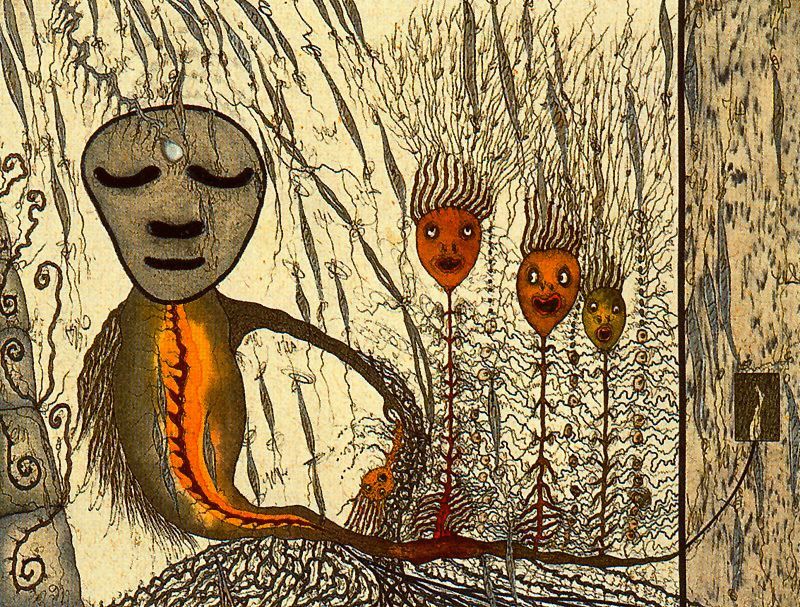
    (album cover by outsider artist Grzegorz Wroblewski)

  • There are so many of them. Don’t you get tired. Reading all those words. Dry lifeless fossilised language. Every technology leaves something behind. There is a cost, always, with traveling from one technology to another. For example from oral literature to written, and now, maybe the omega point, the internet.

    Words, there are too many of them, and we drowning. Brevity works better for the rewiring of the brain via the internet and social media. Of course there are visuals too. And the internet is full of visuals. Cave paintings. Or, perhaps, images with words, the memes. Soon we will be drowning in memes.

    The powerful words are oral, even when written. Voice is everything, or almost. We crave the intimacy of the human voice and this will increase as we move further and further into the virtual realities of the internet. The return to orality in literature is not a new thing. The American golden age of poetry, beginning in the late 1950s with the beats, and also flourishing with the NY School all through the 1970s, and still going, is largely oral and speech based art. The human voice. But it was also there, at the birth of an American literary tradition distinct from the British, more specifically with the primitive energies of Walt Whitman. And yes, we have been always going back there, the primitive, and the oral. Sometimes the pull back there, to the primitive oral is a strong pull, and sometimes weak. When it is a strong pull, there is a strong pull the other way. We are always going there, into the unknown, with the birth of the new. But that’s not right either because the past is unknown too.

    Are we moving forwards, backwards, both or neither. Things are changing folks, per always. But also, there is never a blank slate. We carry everything with us, all those older technologies, especially of the sacred, but their pull is sometimes weak and sometimes strong.

    Where are you traveling to and will words help you get there? This is a great mystery only you can answer. For me, I favour the artists as shamans, sometimes tricksters, mostly unnoticed, part of the ancient primitive. Sometimes a kind of nomadic surrealism, traveling between worlds.

    But don’t get me wrong. I am not talking about the hokey spiritual stuff, full of cliches, greatly enriched by the language of our marketing and advertising culture. The content and style, if we can make the distinction, of my favourite primitive word artists is very contemporary, or at least a mix of contemporary and the ancient.

    How much of culture do the primitive artists shape in a culture of television and movies? Will artists become more powerful with the internet? I say BAH! or BLAH!

    Terrence Mckenna, in a warning that goes at least as far back as the ancient primitive prophets, said:

    We have to create culture, don’t watch TV, don’t read magazines, don’t even listen to NPR. Create your own roadshow. The nexus of space and time where you are now is the most immediate sector of your universe, and if you’re worrying about Michael Jackson or Bill Clinton or somebody else, then you are disempowered, you’re giving it all away to icons, icons which are maintained by an electronic media so that you want to dress like X or have lips like Y. This is shit-brained, this kind of thinking. That is all cultural diversion, and what is real is you and your friends and your associations, your highs, your orgasms, your hopes, your plans, your fears. And we are told ‘no’, we’re unimportant, we’re peripheral. ‘Get a degree, get a job, get a this, get a that.’ And then you’re a player, you don’t want to even play in that game. You want to reclaim your mind and get it out of the hands of the cultural engineers who want to turn you into a half-baked moron consuming all this trash that’s being manufactured out of the bones of a dying world. 

    Yes, this smacks of the great wisdom of the 1990s. I had that bumper sticker: smash your TV! My coming of age, after leaving a Mormon mission, was in the 1990s. The great hope. I could see it, it was clear to every free thinking person, the television was mostly evil. It was brainwashing. But we had a new technology for our saviour, the internet. It was the great hope of the future. I am not sure how it is going. Do you? Somedays I am very optimistic. I am, after all, sitting here typing this for anyone to read, with more potential reach than any traditional print or oral culture could dream of, but does it matter. Do I feel less alone. I am sure there are other like minded people out there. But will anyone read it? I am drowning in information and scatterbrained with clicking and liking. Or, to put it another way, how can I quiet down enough, with all the anxious noise of our culture, especially through social media, more than the internet, to focus and get back in touch with the power of the primitive.

    The primitive is continually being reborn, but also, there is the danger of losing or burying it, at least temporarily. Our ancient technologies.

    bill bissett is the shamanistic primitive poet par excellence. There are of course many others. Turn off your internet brain, at least for a spell, is it possible, and read bill bissett. But not silently, create the spell with your voice and take the nomadic journey. There is everywhere to go and also nowhere!


  • There are so many places in the world and the grass is always greener. If we are lucky and live in rich countries with professional jobs, or live simply, we can migrate to many new countries for work. We can try to find that perfect new homeland for living, or if not a homeland at least a place for renewal and adventure.

    But when we get there, depending on our expectations, maybe we are disappointed. The great let-down. Wasn’t I supposed to feel happier when I moved to this or that place.

    I want to come home. But home is not out there. I have traveled and lived all over the world and each time I thought this might be it, home, but it wasn’t. Yes, some places have been better for my well-being than others, but there is no sense of coming home.

    There is sometimes a sense of coming home after a journey with my whole mind, body, and soul, but it is a certain kind of journey. You cannot package it. It is not for sale. It is a wild journey. The surrealist poets and artists often took this journey and left us aids for the journey, their art. We can renew ourselves with the alienation of wild art. It is a great journey and also coming home.

    The Zen teacher Joan Halifax says it best:

    Everybody has a geography that can be used for change that is why we travel to far off places. Whether we know it or not we need to renew ourselves in territories that are fresh and wild. We need to come home through the body of alien lands.


  • “Slease refuses the comforts of rootedness, stability, permanence. In doing so, he represents what the philosopher Rose Braidotti identifies as the model of nomadic subjectivity “in flux, never opposed to a dominant hierarchy yet intrinsically other, always in the process of becoming, and perpetually engaged in dynamic power relations both creative and restrictive.” For many years now this “world alien,” as he jokingly calls himself in the interview with Wetherington, has been writing poems that celebrate flexible identity and mobile imagination. Equally introspective and retrospective, Play Yr Kardz Right beautifully illustrates his nomadic poetics” (Piotr Gwiazda in Jacket 2).

    The literary scholar, translator, and poet Piotr Gwiazda wrote a very thoughtful review of my nomadic surrealist work, especially Play Yr Kardz Right.

    Also, there is a nice pic of Desperate Literature bookshop. Madrid’s answer to Shakespeare and Company in Paris and where Play Yr Kardz Right was launched.  

    The review of my work, entitled”Nomad Life,” is available over here at

    Jacket 2.

  • The Grand Tour, back in the day, we based on John Dewey and experiential education, at least partially. It was also based on ideas of high culture, and the lack of it in England. Also class and privilege, since mostly it was some aristocratic females and of course upper class males. Get out of the classroom and experience your culturally rich education. Come back to England and show it off with your culturally rich mind and artefacts to prove you have been there, on the continent, and have become a gentleman, or in some cases a noble lady.

    Of course a dose here and there of so called high culture is fine. I also like the idea of experiential education. But not The Grand Tour. The Grand Tour evolved into a kind of package holiday, a list of famous sites to see, take a selfie, and tick the box.

    The experiential is not separate from the imagination. Science is finally catching up, at least partially, with the science of the mind in the east. And also the imagination. The imagination can also be swallowed up by measures and testing. The ultimate enlightenment masculine dream of control (e.g. the idealisation of science).

    Wallace Stevens understood this. And after him John Ashbery. Both influenced in varying degrees by Surrealism and Romanticism. It is the interplay of so-called reality and so-called imagination. But, as usual, we are naturally bi-polar as a species, swinging from one extreme to the other. But that’s OK. Sometimes we find nice interplays. We need an out there and in here to bounce off each other. When one loses touch with the other, we lose our grounding. This goes for dry scientific reasoning and objectifying and measuring everything, as well as imagination without any grounding in the everyday.

    Stevens wrote, “The imagination loses vitality as it ceases to adhere to what is real… There are degrees of the imagination, as, for example, degrees of vitality and, therefore, of intensity. It is an implication that there are degrees of reality. ”

    Yes there is Naples, all fine and dandy, but there is also NAPLES! And the Naples of one influences THE OTHER NAPLES! There are many Naples. Why try to limit yourself to just one. The one that was prepackaged for you.

    Imagination, it seems, is being downplayed in education. Science and technology, and of course the world of buying and spending, are numero uno. We need imagination. Maybe we need to become more like children (not actually children maybe). Maybe that is one of the cures for what is ailing more and more. At least, that’s what I have found!

    The ultimate travel involves the active imagination. It is very powerful, and many children, before it is drilled out of them, travel freely from place to place.What is travel anyway? The actual movement of the body from one place to another? Perhaps. But you can also travel alone around your room. See A Journey Around My Room by Xavier de Maistre. And also many others!


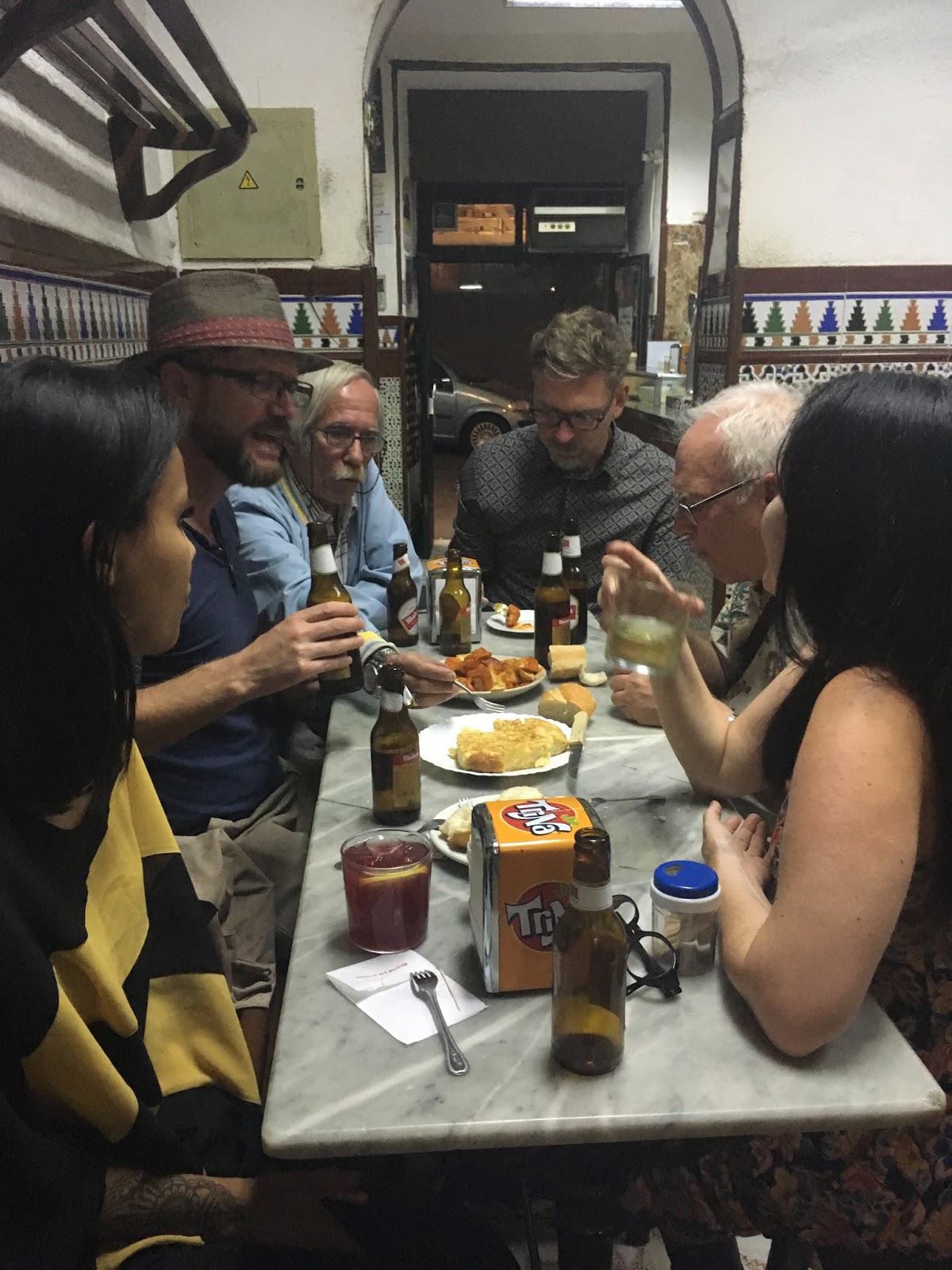
  • When Ewa and I first arrived in Madrid, Christian Pérez, his wife Megan, and their son Oscar welcomed us. Showed us around their neighbourhood of La Latina, lollies and neighbourhood festivals with sweet meats, up on their rooftop terrace, an introduction to mighty fine Spanish olives, wine, and cheese. And much much much more. They are great friends!!

    Christian is a terrific musician, so versatile and expansive and curious with his instrument, it is more than an instrument, both Ewa and I love attending his performances. One of the first ones we experienced, and experienced is the right word, it is fully immersive, you feel it with your whole body, expansive, was at the old tobacco factory, a kind of network of cave street art and music, a lively place, and Christian and other musicians collaborated with dancers, improv, the dancers moved in and out of the instruments, around them like snakes, slithering and bendy, it was all very sensual, and also beautiful.

    Last Sunday, 3rd June 2018, Christian played some terrific improv/free jazz with some visiting avant-garde musicians from Canada, Francois Carrier and Michel Lambert, and it was a spaceship, my pineal gland was vibrating.

    The concert was at Cafe El Despertar, one of my very favourite places in Madrid for experimental music, tons of pictures of various legendary jazz musicians on the walls, and the room for concerts is intimate and cosy, there is direct interaction with audience and musicians, a nook.

    At the beginning of their second set, Christian invited me on stage to read my balloon poems, from my latest book The Spirit of the Bathtub, an improv collaboration with these stellar musicians. It is just what the doctor ordered, feeling that energy, something larger than small mind self, by the time I started the second poem I was letting go, feeling the hula hoop, it is the best kind of nomadic travel. I am still riding those waves!

    jazz poster madrid 3rd June 2018


  • Las Vegas had a show on the telly, it was exotic and foreign, hard to imagine, and we were going there, as immigrant pioneers, for a better life, like immigrants and migrants the world over, changing their languages and also adding to the host languages, the big mixing bowl, maybe.

    Play Yr Kardz Right, my book from underground press Dostoyevsky Wannabe, is a radical venture. Creative spelling for word textures, in the mouth, and also for the eye. Also the voice is often of a child, although not always, and the child is from another planet, a stranger in a strange land.

    Dostoyevsky Wannabe, one of the most vital underground presses in English, made a wee mix tape for the book.

    The music is part of the journey. Some of the songs are from experiences as a recent immigrant to the United States in the 80s. Rocky the movie had a song that repeated living in America over and over. It was showy, this new land, and more direct, unabashed, I needed to develop something called gumption. There was also Sugarhill Gang (Jump on It) and it was one my favourites. It made me want to become a better dancer, and maybe, later, learn to breakdance, like so many of the other immigrants in the apartment complex. There are other songs too. Some more recent ones, from living in London, like Grime, and further back while living in the Northwest of the U.S. with the story of an artist from Daniel Johnston, and many others.

    There is an outsider artist mentality at work in Play Yr Kardz Right, observing, but also participating from a distance. I think the music of this mixtape gets at some of the tones and emotions of Play Yr Kardz Right. Play Yr Kardz Right is part naive art, but also part of other arts too, a mix of many, a hybrid, not pure, not fully anything, and in some ways anti-poetry, via Nicanor Parra, also primitive, another kind of nomadic surrealism.

    Playing your kardz right, the highs and low, good luck, bad luck, it keeps spinning, the wheel of samsara.


  • I have never been comfortable with money. The chasing it, living my life for numbers. In America, as an immigrant, I was saturated with the lack of it. Lower middle class, chasing the American dream, the endless informercials and my family trying so many pyramid schemes, doing the grunt work to make someone else wealthy, but also believing in the great hope, like selling water conditioners door to door in rich neighbourhoods, in Las Vegas, in suits, in July, with my high school friend John, no one buying, and deciding no, that’s not it. Growing up with the bill collectors calling, the endless stress and worries, money, never enough of it. I thought, hey, I am not gonna chase it, I’m gonna lower my desires, as much as possible, so I require less money. Lower middle class forever.

    But also, lately, middle aged and 44, no retirement, no kind of property, some signs of declining health, nothing to sell in a pinch except this computer, maybe some books, precarious low paid work for 13 years as an adjunct English teacher at wealthy colleges (this year was my wealthiest year in 28 years of working, in proportion to the cost of living, it was 14,000 euro), and doing a lot of extra unpaid work for various wealthy institutes and colleges, and I am wondering where all the money is going. If students, or rather their rich parents, are paying so much money for tuition, why are the workers/teachers paid so little. The people making the money just keep making more money. The system is rigged. It is one big casino and the house almost always wins. Sure, someone might win now and again, but that’s to keep the workers working, believing the impossible dream, that one day they will become a master, and continue the system, or at hit it big and retire, somehow. The masters are born wealthy, move their wealth around, make more money. It is all a game. Forget about it. Nowadays, if you graduate in something to do with the arts and the humanities, you can almost guarantee it, some form of poverty, unless you have something to fall back on, like a wealthy family, or maybe a trade of some kind, but rarely university teaching. The university lecturer and poet Sophie Robinson recently tweeted about the casualisation of academic labor, and of course the arts are also causalised, you are supposed to donate your time, energy, and creative labour for free. If you already have the wealth from family, some kind of lucky background, where you can afford to work for free, this is all fine and well, you can write or paint as a hobby, donate your time and energy, nothing wrong with that of course, very good, but for those trying to survive and keep their heads above water, it feels a lot different. I have noticed, quite often, although not always of course, teachers teaching for pocket money for wealthy institutions and feeling fine with this. There are various reasons I am sure, but I keep seeing teachers who have a rich spouse, their partner is a diplomat for example, and they just want to teach an English class or an art class or something for a little extra cash, pocket money for weekend getaways. But what about those of us who rely on this money for literal survival. Well, that’s just the game. If someone agrees to work for low pay, it is low pay for everyone. Everything is ruled by profit, but what about an attempt at a universal declaration of rights for workers? We are still waiting.

    Even in writing this post, I feel sick inside. What if I earn less than 14,000 next year. What if this post is bad luck. I should keep quiet and feel grateful to have shelter and food and also enough money for books and even some entertainment. So many people in the world have it much much worse, it is hard to even imagine. But I also wonder about what we value, in our cultures, where we put our time and energy, what we support economically.

    Some folks might argue this market system of value rewards those who graduate with degrees in engineering, economics and business, and that sometimes poverty is more or less the fault of people who choose to follow a path in the arts. But equally another question to consider is why we choose not to value the arts, and often reward professions that cause great destruction and harm to our planet, and also our psychological well-being.

    I never expect any money for a performance of my work, in part because money is dirty and I don’t want my art dirty, and also I don’t feel entitled or worthy, I am not important enough. When there is some kind of compensation, even the cost of a train ticket for traveling to the venue, I feel very lucky. Why is this? I am afraid of losing my freedom to create by having it tied to money.

    I am seeing the economic and political system more and more for what it is, massively skewed towards free government handouts (tax breaks for example) for those who are already wealthy, while the real hard work is born on the back of the workers, and we as workers are brainwashed into thanking those very masters who have rigged the system in their favour. What is up with that? Well, we are told stories, mostly fairy tales. One of the stories is if you work really hard, and believe in your dreams, doors will open, everything will work out. Another form of hoodwinking? Maybe.

    Maybe after 28 years of working on this planet, I will earn a more comfortable wage, and maybe even have something in case I retire, and if I have more money I will not necessarily change into something I have always feared: the middle class hungry monster. Maybe there are many kinds of middle class. Books have been written, from a utopian capitalist perspective, on how to become a millionaire, thereby making the author a millionaire. This is especially the case in America, the capitalist pyramid par excellence, a dystopian nightmare for many. Everything is bigger in America. There is never enough. It is the ultimate hungry monster. In most of Europe, with things generally smaller, and at least some humane systems of welfare and concern for citizens and community, things are overall much better. And it is much easier to survive simply here in Spain than in London, London being a copycat of American values that favours bankers and property chasers. But also, of course, the hungry monster is here too, almost everywhere. Capitalist values have engulfed the planet, we are all hungry monsters, to varying degrees.

    As a writer, from a lineage of avant garde artists, middle class is usually a sign of less authenticity, at least in my circles, but I have noticed that a majority of these same writers and artists are from comfortable middle or upper middle class families, this seems to be the case with just about all the artists and writers you may have heard of. From Pablo Picasso to Henry Miller to Leonora Carrington to just about every novel ever published in the United Kingdom, middle or upper middle class backgrounds, sometimes with wealthy patrons, such as their partners. And of course these same middle or upper middle class artists recognise each other, in terms of the content of their writing, it is familiar, the cocktail parties and fancy dinners and luxury travel or temporary slumming, they recognise the lives they are writing about, they network and keep the game in motion, publish books, receive awards, review each others work and call it universal human values. Of course, this is not to say that because the majority of art we may know in the world is from middle or upper class folks it is less valuable, or less interesting, but rather we are doing ourselves a disservice by not allowing for other voices in the arts, from other classes. It is a kind of poverty of the imagination. Art requires leisure and money or patronage, and if you don’t have those, you die, or just give up, or maybe you continue creating, somehow, if you are lucky.

    Do I feel more virtuous having less money, more artistic and authentic? It seems that narrative, at least in part, comes from a kind of romantic vision of the middle class artist, temporarily slumming it, in Paris or wherever, like Hemingway and the so-called Lost Generation, and the wealthy aristocratic poets before them. All fine and well and interesting, but again, it is a very different situation without a safety net.

    Maybe I can live simply, but more comfortably, with more money, without becoming a hungry monster, without attaching myself to the chasing of money, if I can somehow acquire a more permanent teaching position, or change professions, & overcome various barriers, such as ageism, maybe I can live more comfortably. Maybe there is a middle way with money. But how much is enough? I don’t want to become a hungry middle class monster, or lose what I need for my psychological survival, the creation of my art. Maybe that is what I associate with middle class: suffocation in overly sanitised environments and the killing of my creativity. But maybe there are other options. I hope so.


  • A few years ago The National Poetry Library in London invited me to record a poem. I decided to read my poem”The Fly“.


    After the death of my brother Aaron, I began having a series of dreams about flies. Every night the flies came. One night, I tried to speak to one of them. But it wasn’t a real fly. It wasn’t organic. It was a giant fly made of cardboard. It was an artsy fly. My childhood dog, lady, also showed up. And she dug a hole, just like maybe 20 years previously, to give birth. She was in great pain but something beautiful was happening too, the birth of new life. So there was the fly, the eater of poop, and my childhood dog, giving birth, but in a hole.

    There was no speaking to the fly. It was a silent movie, full of images, like the early films of the surrealists.

    Death and birth, back and forth, dancing together. Can they really be separated?

    4190041225_96bcaf213c_o.jpg

    “Alien Encounter” by Azarius is licensed underCC BY 2.0

  • Why do we travel? The weekend getaway. The summer and winter breaks. The islands and exotic locations. What are we looking for?

    The travel industry is one of the biggest on our planet. According to the World Travel & Tourism Council (WTTC), the travel industry generated 7.6 trillion U.S. dollars in 2016. We are looking for something obviously.

    Do we travel to escape our mundane lives? That is surely one of the biggest reasons. But often, at least from my own experiences, we bring our fears and anxieties with us. Some of us, me included, might even panic a little without the comforts (and pains) of our daily routines. And yet the allure of kicking back on the beach with a cocktail, with the turquoise water of the Mediterranean, while a cliche, is hard to resist. We want new scenery to refresh ourselves. We all know stress (too much or too little) affects the quality of our lives and we are told a recreational holiday will renew us. Keep us fresh and productive workers. Employers know this and give us paid holidays.

    Holidays are a type of recreation, time spent away from work, but what is recreation?  Recreation is RE CREATION. Maybe you have heard that before. But it is good to contemplate. Do our holidays enable us to really RE CREATE ourselves? Do new environments really RE CREATE us?

    “It is not necessarily at home that we best encounter our true selves. The furniture insists that we cannot change because it does not; the domestic setting keeps us tethered to the person we are in ordinary life.” That’s Alain de Botton. I think he is onto something.

    What is ordinary life? Well, I suppose it is a kind of delusion.We are “tethered” to our everyday obligations, worries, and fears. We all lead busy lives, endlessly trying to balance work, family, and the endless options for entertainment, and, perhaps often detrimental to our well-being, comparing ourselves with others via social media. We are also “tethered” to the idea of permanence and trying to cling to it. Permanence is an illusion. The Buddhists tell us this and we can check it out for ourselves. Take a look around. Everything is always changing. Nothing is permanent.

    This realisation of non-permanance can engender further worries. How can we anchor ourselves if everything is changing? One response, and I think it is quite natural, is to try to cling to what appears, at least for now, as solid. But there is another response, and at least from my experience, more renewing and life enriching, and that is to allow for this change, not to see it as the enemy, but rather as a potential source for wonder and awe.

    When I lived in Poland, I remember visiting Krakow and seeing the tourists flock to comfort zones. The British tourists to British pubs for British food and beer and football. Maybe, out of guilt, some cultural excursions. While living in Turkey, especially around the southern Antalya province, I also noticed the same thing. British pubs, British all day breakfasts, fish and chips, and so on. This of course is understandable. We also want the familiar from our daily routines. It is a kind of comfort, at least temporarily. I understand the appeal. However, for me at least, I feel most renewed with surprise, awe, and stepping out of the familiar.

    This stepping out of the familiar doesn’t come right away. I start off by clinging. Worrying what’s for breakfast in the new place, the best deals for lunch, trying to get myself situated. But when I am able to let go, allowing for the new environment to refresh me by not clinging to the familiar, time mostly disappears, or at least the clinging to it, and I feel the most free and happy. I am fully in the present moment, not weighing and judging and comparing, but open and ready to experience whatever is happening now in front of me. I am seeing the world again as if for the first time, because it really is the first time. The Buddhists call this beginner’s mind. You don’t have to travel, of course, to experience beginner’s mind, but it can be one of the ways.

    The mind is the source of suffering and pleasure, but the environment, of course, plays a factor. Stepping out of the familiar. That, perhaps, is the source of our recreation. Traveling as a way to see things as they really are, forever changing. Spontaneous travel can help us recover our curiosity. Here is another piece of wisdom, this time from the great Zen teacher Alan Watts:

    Real travel requires a maximum of unscheduled wandering, for there is no other way of discovering surprises and marvels, which, as I see it, is the only good reason for not staying at home.

    This is the child’s mind, open and curious. For me, it is the greatest source of recreation. This child-like beginner’s mind can renew us. Lots of wisdom teachers tell us about the importance of beginner’s mind. Jesus said to become like a child to enter the kingdom of heaven. What is it about children? Again, look around, they are naturally curious, in the moment, not clinging to the past or future, a beginner’s mind. It seems, at least from my experience, as we get older and become aware of mortality and death, we cling more and more to the illusion of permanence. For me, that is the source of most of my suffering. My mind trying to hold on too tightly. I am most happy in the moment, fully immersed and also observing, curious and open.

    Nomadic travel does not require exotic locations and extensive planning. It can happen here and now, in your own neighbourhood. It is about letting go of expectations, cultivating a child-like curiosity.

    Here, again, is Alan Watts:

    The only way to make sense of change is to plunge into it, move with it, and join the dance.

    The dance of life! What a great mystery!


    hotel europa.jpg
    Hotel Europa by Eugenio Azzola is licensed under CC BY 2.0


  • Super happy to have my poem “Feedback” in Poetry magazine. It is part of my manuscript The Green Monk, forthcoming from Boiler House Press in November 2018. It was composed while ingesting everything written by the great Lydia Davis. I can’t help wondering if some of her approach to writing leaked in there, but also other writers of course, there are always others, and also whatever was happening around me, the influences, how can we frame them. What is influence anyway? It accrues and accrues, but does it disappear? Who gets to decide who is influenced by whom? Readers feel some influence of maybe something else they have read or watched or experienced, the writer feels the influence of some writers. We need an audience to hold up the mirror. And also the artist is a mirror. We are all mirrors reflecting each other’s influences. Of course art, like everything, never occurs in a vacuum, it is interdependent. You can choose how you want to frame the influences. Forget about the isolated romantic genius. Originality is a collaging of influences.

    It seems maybe there is red hot writing and there is cool writing, and then there is lukewarm. Or maybe a better way to think of it is some distance. This poem “Feedback” has some distance, via the style and framing of feedback, although the content has some fire, some lyricism. It was partly collaged from feedback on a friend’s slipstream novel in progress. William May and I met in Greensboro, North Carolina, during our days in the MFA programme, and have kept in touch, on and off, since 2005. His novel in progress is a nomadic surrealist journey, with many great mysteries. Without worrying about creating a poem I collaged some of the feedback I wrote for his novel, added some more layers, allowing for some chance operations, and called it feedback.

    Isn’t feedback a kind of influence. I am also thinking of feedback in terms of sound.  That rumbling, whining, or whistling sound resulting from an amplified or broadcast signal (such as music or speech) that has been returned as input and retransmitted. As in a feedback loop. Our brains are a feedback loop. How do we get out of the loop. That wheel of samsara, as Buddhists call it. And what about the connection between the inside and outside. We have a brain. It goes and goes. And also there are various stimuli happening outside of us, all around us. What do we do with it? Does all it get in there, either into the so-called conscious or unconscious brain. The surrealists, inspired by the breakthroughs of Freud, wanted to tap into the unconcious and create a holistic person. It was an optimistic avant garde movement. How many layers does it take to get to the centre of the onion. I don’t know what is behind our layers, or our words.

    Feedback” is out there in the world now, echoing, maybe reverberating with all the other sounds of poetry, and I hope some folks find some use with it. I hope the words are touchstones for the creation of a reader’s journey.

    And yet, how much time do we have, really, to read words. It is my main activity, in terms of my art and life, and yet I get so tired of them. These words. They are never enough.


    portugal1


  • My partner Ewa and I visit Poland for Christmas every year. My partner Ewa is from Katowice so that is our home base. During our summer visits we explore mountains and villages, but at Christmas it is mostly family. 

    However during Christmas 2016, after 4 months of living in Madrid, our new home base after many years in London, Ewa and I decided to leave Madrid a little earlier and stay in Krakow before Christmas. 

    There is some good magic in Krakow, especially in Kazimierz. Our of our favourite spots was Alchemia Club.  Alchemia is the Polish word for alchemy (as you might have guessed). At the time I was deeply immersed in the art and writing of Leonora Carrington and alchemy plays a big part in her surrealist practice, including the transformation of food. Dali is also famous for surrealism and food of course, but there is perhaps a different magic at play with Leonora Carrington, a kind of feminine sacred, the kitchen as a place of magic and transformation rather than the banality of “feminine” chores. I could relate to this transformative practice in my own art. The transformation of the banality of the everyday. A few prose poems from this nomadic journey in Kazimierz are published over at Reality Beach. The words themselves acting, hopefully, as a kind of alchemy. An engaged interaction between the physical and imaginative worlds. 

    Although, maybe the so-called everyday is already magical and we just to have see it for what it is, wild and untamed and full of potential. That’s not to say, of course, that certain environments, as stimulants or aids, cannot help us see this wild reality more clearly. 

    Ewa and I spent quite a few nights at Alchemia Club. It has a magical old world bohemian feel. The square with Alchemia, Plac Nowy, was a dangerous area after 1989 with the transformation of Poland from communism to democracy, but the area has since been transformed. It has 19th century buildings with a new “hipsterish” vibe. While I am usually allergic to hipster areas, with their overpriced cereals and gentrification in East London, my former homebase, there is also something different about Plac Nowy and Kazimierz in general. It hasn’t been completely sanitised and sterilised. Perhaps the gentrification/colonisation is slower in Krakow. There seems to be a good balance of old and new, not just an area for the moving capital of the upper middle class and very wealthy, at least for now.

    It is hard to define authenticity. Authentic art and authentic environments. How can we define them? I did not feel authenticity in Las Vegas, the place I immigrated to in America, and lived until almost the end of my high school years, but I do feel it in other purpose-made environments, with their simulacrum of the old. Maybe it is partly to do with how well the artifice is made. All art is of course artificial/artifice.

    Alchemia has a shabby chic feel and it feels real. The bohemian cafe by day and concerts at night, with some incredible experimental jazz and electronic music. It has a primitive feel  and it is useful, at least for me, as an aid or stimulant for nomadic travel. The other pubs in the square also have some good spots for absinthe/ the green fairy. In the middle of the square, with its ancient horse stands, there is late night zapiekanka. Our visits to Plac Nowy felt magical every evening, with a lot of fog covering the streets. We couldn’t see our hands in front of us at times and kept running into a German couple asking for the post office even though it was after midnight. We found out halfway into our stay that the fog was really smog, high level pollution, typical of Krakow during this time of year, but somehow it didn’t take away the magic, at least as a temporary nomadic visitor. There really is an old world magic to the place, even with some of the hipster vibes.

    Do you ever feel like something is directing you, moving you towards places? Of course, this could be an illusion. We like to create meaning after the experience. It could all be a coincidence. My immersion in the alchemical art of Leonora Carrington and Alchemia in Kazimierz. Maybe we can put ourselves in a certain state of mind for these kinds of magical moments, these alchemical transformations in our lives.

    IMG_1346.jpg
                                                        (Ewa in Alchemia Club. Picture: Marcus Slease)
  • Panmelys

    wrote a nice review of my nomadic poetry.

    She writes:

    “seeking otherness
    Of a soul, hungering after ‘Hiraeth’.
    Which means ‘A longing for something This
    World can never give’, Celtic source, with an
    Emphasis on ‘This’ as opposed to ‘Other ‘world”

    I like this very much. I think it gets at the seemingly contradictory tensions in my work. My poetry is, I think, influenced by some NY School Poetry with its emphasis on the everyday and conversational language, and also surrealist. Maybe Ron Padgett’s form of surrealism mixed with a visionary poetics. NY School poetry is itself influenced by French surrealism, but with a lighter touch. That’s where I am coming from, overall.

    My work is a nomadic writing practice, living simply in many countries, immigrating since the age of six. It is also a kind of contemporary shamanism traveling between visionary and so called ordinary states. Sometimes dream-like states of the unconscious and other imaginary worlds of the “marvellous,” but also an attempt at zen like grounding by accepting the absurdity of existence. The Zen teacher Gil Fronsal suggested that Buddhism is maybe a kind of existentialism, but without the angst. I think that is maybe my orientation.

    After coming home early from my Mormon mission at age 20, in my newly adopted country of the United States, and arriving in a small town in Utah, I felt alienated. I was having what is commonly called an identity crisis. When I immigrated to America, at age almost 12, I adapted myself to the United States by moving my mouth like an America. Eventually I got rid of my Northern Irish and working class British accent. The same thing happened when I immigrated from Ireland to England at around age 7, but not completely. It wasn’t good to have a Northern Irish accent in England in the 70s or 80s. It is a bit like being from the “middle east” today. You were a terrorist, or a drunk. So I tried to become more and more English (or British), but I still had traces of my Northern Irish accent. And then came Mormonism. A new religion. It helped us immigrate to the United States and survive there. The Mormon church helped my family a lot with food donations and also hope. My mum and my sisters still carry that Mormon hope. I have left the Mormon church with its attempt at Truth and a fixed meaning of life. And I have continued traveling the world without a home base. My alien card for America has expired. I have no legal claims to the United States of America and they have no legal claims on me.

    My passport is British out of convenience but I need to change it to Irish. I am an Irish citizen since I was born in Northern Ireland. I hope that doesn’t change with Brexit.

    And yet my ancestors go back to Lowland Scotland. And also French Huguenots. I was born in Ulster.

    Do I feel Ulster Scots? Yes, there is some of that, it is part of me. I’ll take the country and western legacy and also Johnny Cash and Van Morrison. Also David Lynch (An Ulster-Scots father). Ulster Scots is the language of my childhood and all my relatives, except my immediate brothers and sisters and step father. In America, almost every evening for many years, my mum sung the songs of Ulster and Ireland to us, and also the stories. So many stories and songs from Ulster. My mum is a natural storyteller. In America, my mum seems at home as a first generation Irish American. Many of her friends are different kinds of Irish. There are no more distinctions between protestant and catholic. I hope someday Ulster Scots is another kind of Irish.

    So I am really a hybrid. Americans are often hybrids too but if they have lived in America for so long, then aren’t they just Americans? The great melting pot experiment. Is it working? We are all searching for home, a place to belong.

    When is someone really from somewhere? I cannot really fully answer the question: where are you from? Actually, if you examine that question long enough, it becomes more and more absurd. Where are you from? The Mormons try to trace their lineage back to Adam and Eve. We are all from Africa. But that’s not it either. We are from the Milky Way. And something further. Nothing.

    After my Mormon mission I returned to university. I thought education was the ticket out of poverty, but more importantly the key to my freedom. I focused all my energy on education and school when I immigrated to the United States at almost age 12. But after the Mormon mission, and no longer believing, it was existentialism and philosophy that helped me. I saw, and still see, the absurdity of existence. For a while it was psychedelic existentialism (with various spiritual searchings in the desert, both literal and metaphorically). Now, mostly, I am finding absurdity as a way of letting go. Yes life is often absurd, so why cling to it. When faced with the absurdity of existence, no fixed meanings or metaphysics, Camus considered suicide. But there is another kind of letting go in the face of absurdity, Buddhism as a practice. I don’t really consider myself a Buddhist in terms of a fixed religion, but more of a practice, in motion. Ditto my art. My art/writing is a practice in motion, traveling. My reading and experience of art is not separate from my life. It is all part of my life. It is part of that original grand experiment of the avant garde, to unite life and art.

    Of course, words are slippery. And labels, as words, are sticky. I am a writer cosmonaut. A traveler. Like all of us.

    cropped-26596570007_7cf85c1ae9_h.jpg

    “Pregúntale al padre – 4” by Ubé is licensed underCC BY 2.0

  • The only award I ever won, and didn’t even enter, was for a poem called “Mr Whiskers and the Picnic Basket.” It was published in Hayden’s Ferry Review as a winner of the AWP Intro Journals Award. I was completing my MFA at UNC Greensboro at the time. Then it was republished at storySouth in 2004. This time of my life, in Greensboro, North Carolina with the terrific writing community of the UNC Greensboro MFA program, as well as the artist collective The Lucifer Poetics Group, was full of possibilities, wonder, and a sense of coming home as a writer. I mean, that is where my real writing life began. It was also one of the larger turning points in my life journey. Almost two years later, after a lot of personal therapy and marriage counseling, I reduced my life to 15 kilos and flew to South Korea to live. A few months after moving to South Korea, I signed my divorce papers. I also left the United States forever, although I have been back a few times to visit in the last 12 years.

    It is 2018. So yeah, 14 years later, that one poem, “Mr Whiskers and the Picnic Basket,” rather suddenly infiltrated my novel manuscript The Autobiography of Don Whiskers, and that manuscript has already been infiltrated many times already. So, in other words, there is a lot of mutation happening. Various forms of alchemy.

    For about six years, The Autobiography of Don Whiskers used to be called Never Mind the Beasts, the name of my MFA thesis, mostly coined by a good friend and fellow poet in the Greensboro MFA program, Dan Albergotti.

    Never Mind the Beasts is also, of course, the title of this blog, in various incarnations since 2003.

    Now my first novel manuscript has become The Autobiography of Don Whiskers. And Mr. Whiskers, from so long ago, is the main character. Of course, it is not quite the same character as the one in the poem. Don Whiskers has become fleshy and fully expanded and full blown. Me and not me.

    The Autobiography of Don Whiskers is epic travels and immigration. It begins in Northern Ireland and then travels to Milton Keynes, England. Then Las Vegas, Utah, Washington State, North Carolina, South Korea, Poland, Turkey, England, and then the novel ends in Madrid, Spain. Part two picks up in Madrid. The autofiction of Karl Ove Knausgaard, as well as the surrealism of James Tate, Lukas Tomin, and Leonora Carrington, helped open up possibilities for this trilogy of novels in progress. Part one is called The Autobiography of Don Whiskers and part two, I am already 60 pages into it, is called Hermit Kingdom. It is a hybrid novel, a mix of various genres including prose poetry and flash fiction, but it is quite seamless as well. It is partly autofiction and partly nomadic surrealism. A nice blend.


    Marcus-Slease-Reading-Joanne-Kyger.jpg

  • Some of my poems from Hello Tiny Bird Brain (a chapbook from Knives, Forks, and Spoon Press in the U.K.) are now available in Polish. Translated by Adam Zdrodowski.

    These poems in Polish originally appeared in the Polish magazine Helikopter  and are now published in Helikopter‘s terrific anthology of Polish poetry – Przewodnik Po Zaminowanym Terenie [A guide through a minefield] (Wrocław 2016). Helikopter is a Polish cultural magazine. It is a sup­ple­men­ta­ry to the Cre­ati­ve Arts Cen­tre­’s work con­nec­ted with the vi­su­al and mu­sic area. The Creative Arts Centre is based in Wroclaw, Poland.

    Some of the poets from the anthology read on the second day of the  SILESIUS International Poetry Festival 

    The Anthology is edited by Krzysztof Śliwka and Marek Śnieciński.

    Super happy to have some more poems in Polish. My Polish friends tell me they read very well in Polish. I must learn more Polish. Adam Zdrodowski is a terrific translator of such greats as Lifting Belly” by Gertrude Stein, prose pieces by Raymond Roussel and William S. Burroughs as well as poems by James Schuyler and Mark Ford. It is nice to be in their company!!!


    My poems in Polish in the anthology Przewodnik Po Zaminowanym Terenie are also online at the Helikopter website.


    FABRYKA TURBIN ALSTOM
    (Elbląg, Polska, 19 listopada 2009 r.)
     
    wstać
    o 6
    nasypać kawy
    do filiżanki
    zamieszać
    to się nazywa kawa po turecku
    ale nią nie jest
    wyjść
    na deszcz
    minąć chłopaka z łopatą
    włosy i kości
    okazać dokument
    wbiec do sali
    uczyć 
    negocjacji
    wrócić 
    do domu
    zjeść płatki
    ELBLĄG>KATOWICE>ELBLĄG
     
    starzy żule
    trzymają twarze 
    w dłoniach
     
     
    ZALEW WIŚLANY
    (część polska)
     
    oda do bikini
    zapiekanki
    lepsze niż soczysta
    polędwica

    [wiersze Marcusa Slease’a w przekładzie Adama Zdrodowskiego z książki: PRZEWODNIK PO ZAMINOWANYM TERENIE. HELIKOPTER, antologia tekstów z lat 2011-2015, wybór i opracowanie – Krzysztof Śliwka, Marek Śnieciński, Ośrodek Postaw Twórczych / Biuro Festiwalowe IMPART, Wrocław 2016, str. 16-17]

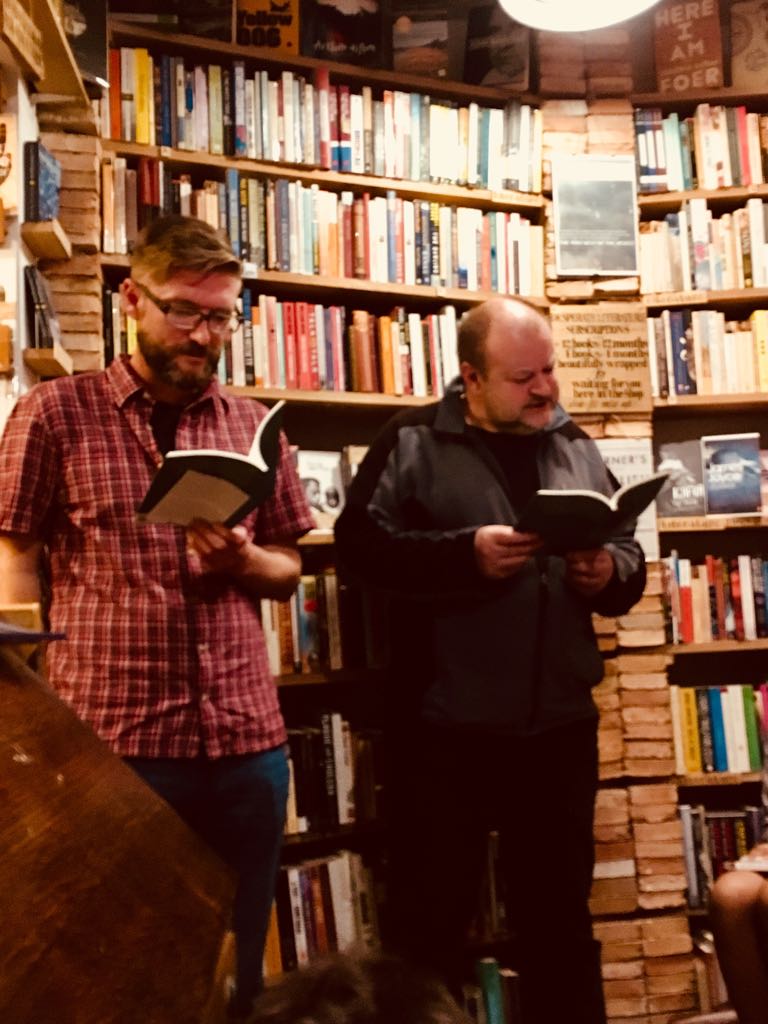
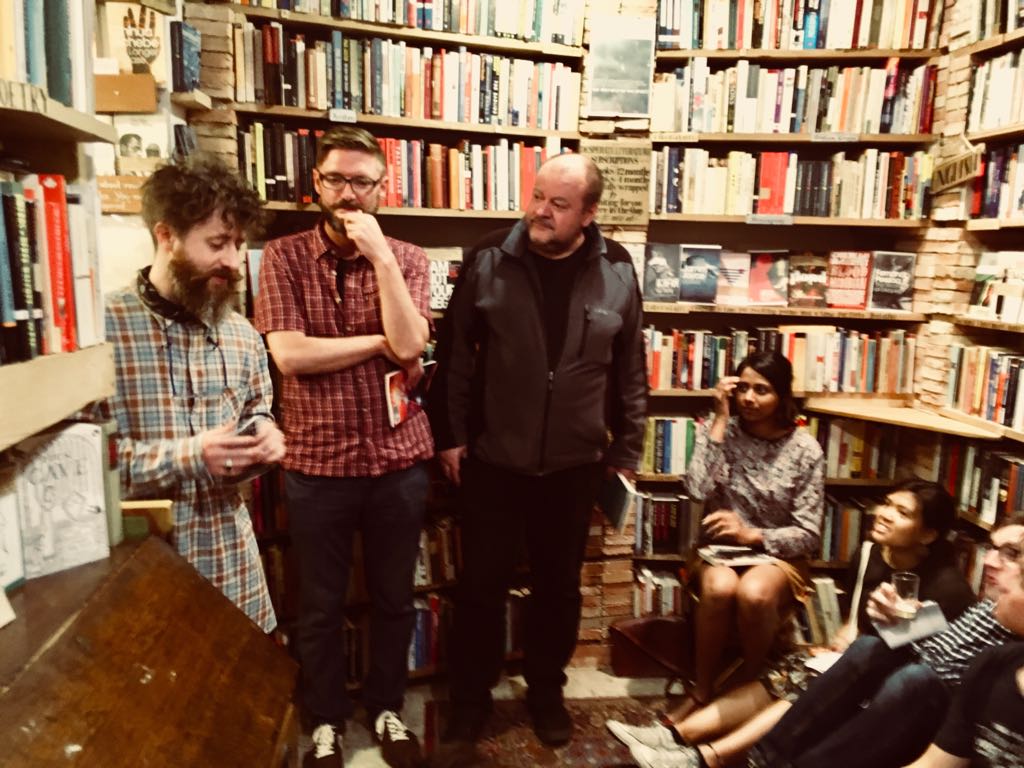
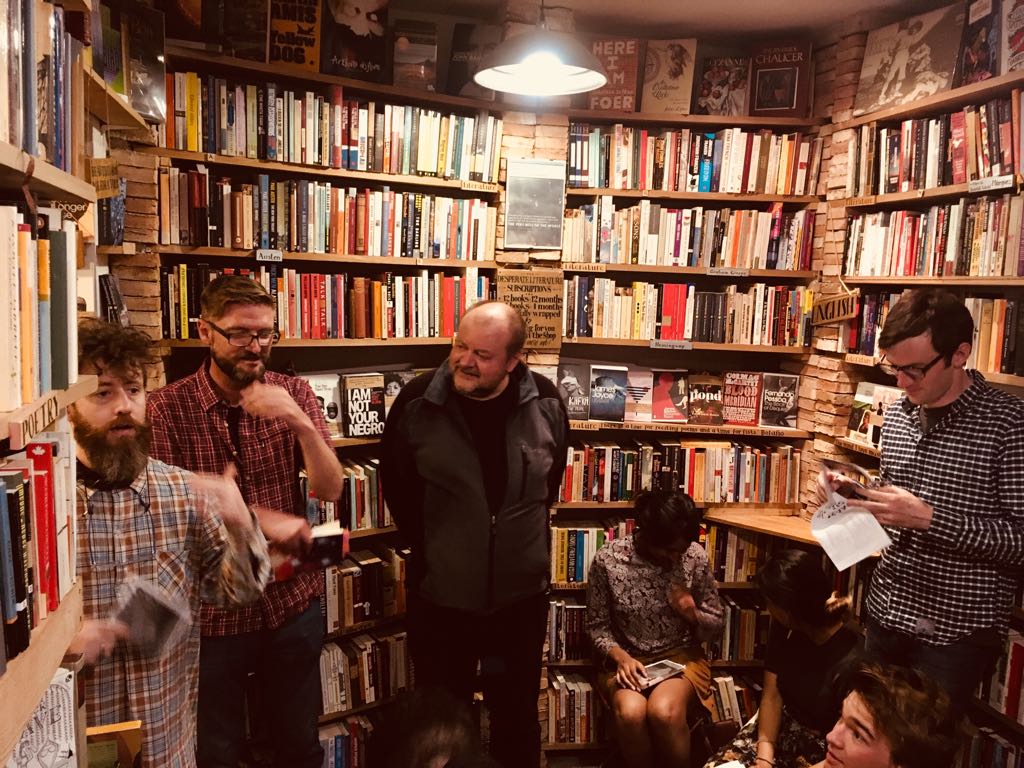
  • A terrific launch last night of The Spirit of the Bathtub with Grzegorz Wroblewski reading from his latest work (in English) Zero Visibility (translated by Piotr Gwiazda).

    Super nice folks in the audience. Nice chats during and afterwards.

    We are not alone folks!


    IMG-20180513-WA0004.jpg

    IMG-20180513-WA0000.jpgIMG-20180513-WA0005.jpgIMG-20180513-WA0006.jpgIMG-20180513-WA0003.jpgIMG-20180513-WA0002.jpg

  • “My step father grew up in Warrington, he joined the British Army. A way out. Northern Ireland. He married my mother. In Bletchley, we went to the swimming pool. Hot chocolate, in the plastic cup, from the machine. I’ll give you a pound if you go down the slide he said. In London, in the homeless hostel, a sip from his beer. Play Your Cards Right on the telly. Twisting his moustache and flexing his biceps, playing Mormon hypnotism, on Mondays, in Milton Keynes. In America, wilderness survival. Black powder rifles and shotguns. Then, snowed in. In the sleeping bag, hypothermia. Awkward bonding. I do not know how to hammer. When I worked construction, I could not find the stud. I am not a man. I am not a woman. Yet here we are. Father and son.”

    From The Autobiography of Don Whiskers. My novel in progress. This except, “On Fathers,” published at European Review of Poetry, Books, and Culture.

    You can read it over here:

    http://www.versopolis.com/column/609/on-fathers


  • I just reached over half million visits on my blogger website Never Mind the Beasts.  A mile stone maybe. Thank you so much for stopping by!!

    The blogger Never Mind the Beasts blog has now gone dark to avoid duplicate content.

    Never Mind the Beasts now has its own domain and a new site. This is the new site.

    I have moved posts from blogger to this site (2003-2018). Over the years, I have discovered some themes/interests in the blog posts: buddhism, NY School poetry, absurdism, indie publishing, surrealism, and especially travel. The travel writing is really a nomadic travel writing from living in many countries. Autofiction sometimes.

    Then, a realisation. Most of books of poetry also deal with travel, but often with an absurdist or surrealist angle. Maybe a soft surrealism. So yes, nomadic surrealism. This is a nice label, as far as labels go, for my work. But only as long as it doesn’t become constraining, as most labels, or mean nothing, unless it is the good kind of nothing, the kind of nothing pregnant with possibilities. I like that kind of nothing. And also the nothing of liberation and freedom (Buddhism).

    I am still unsure if I should have all the posts from 2003 until 2018. I am tempted to start fresh with 12 or so posts on this new website. Starting fresh is one of my favourite activities. Returning to a beginner’s mind.

    It is nice to start fresh. Another reason for traveling. Starting fresh. Seeing things as if for the first time. This can also become a function of art. Starting fresh. A beginner’s mind.

    Here are some rainbow puppies to celebrate this author website and blog:


  •  

    Las Vegas, 1985, maybe August. I am a newly arrived immigrant in the United States of America. First Vallejo in a trailer park and then Las Vegas. Also, from a few years previously, a new religion, Mormonism.

    I was almost 12. On the border of puberty with a funny accent from Northern Ireland. Do you want to see the strip, asked my mum. I didn’t know the strip but it was obviously something exciting. My stepdad drove the car, a secondhand Nova donated to us by the Mormon church, to the strip. Needless to say it was buzzing. I was saturated with eye candy. Las Vegas, on the strip, was hyper sexual. It is one of the sin cities in history.  Maybe the premiere sin cities. Circus Circus was my favourite. We ate a very large American buffet. It was cheap, and even cheaper for us since we were Mormon. They wouldn’t make the money back from the slots. We just came for the steak. And also, sometimes, the eggs. American steak and eggs. And then a toothpick afterwards.

    In the new Mormon church, everyone was brother and sister. A nice thought. But no one got our new surname right. So my mother was sister sleeze. Instead of Slease. Slease is pronounced like a leasing a car and adding an s. We got the new name when my remarried a British solider in Northern Ireland (and part of the reason for leaving the country). No one knows where the surname comes from. I have felt alienated from it. But also, it’s my name. Your name is the first fiction. Is everything a story? Maybe almost everything.

    Here is a story. It is from my book Play Yr Kardz Right:


    Play Yr Kardz Right is now available from Dostoyevsky Wannabe: https://dostoyevskywannabe.com/original/play_yr_kardz_right

  • “For eight years now I have been translating the poetry of Grzegorz Wróblewski, a Polish writer and visual artist based in Copenhagen. So far we have published two volumes: Kopenhaga (Zephyr Press, 2013) and Zero Visibility (Phoneme Media, 2017). We are now working on our third project, Dear Beloved Humans: New and Selected Poems.”

    — PIOTR GWIAZDA

    The writing and art of Grzegorz Wroblewski has connections to the anti-poetry of Nicanor Parra, the dark comedy of Samuel Beckett, the raw punkness and absurdity of Andrzej Bursa, and the surrealist prose poems of Charles Simic. Legendary critic Marjorie Perloff says of Grzegorz “[he is] the true poetic chronicler of our twenty-first century diaspora in all its absurdities and anxieties.”

    READ THE ARTICLE OVER AT JACKET 2:

    https://jacket2.org/commentary/dear-beloved-humans

    A still from “Grzegorz Wróblewski do ludzkości.” (c) Krzysztof Jaworski.

  •  


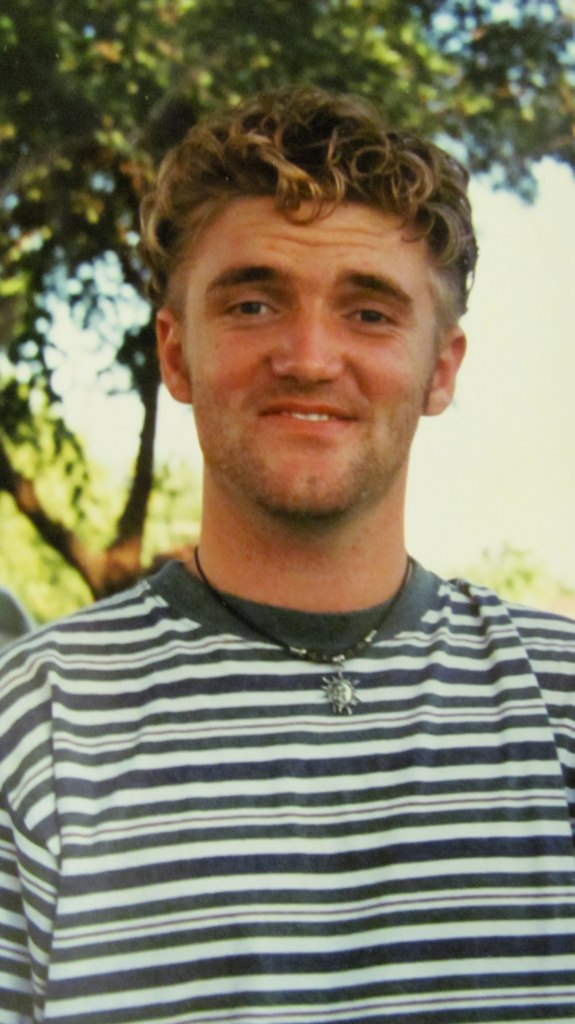
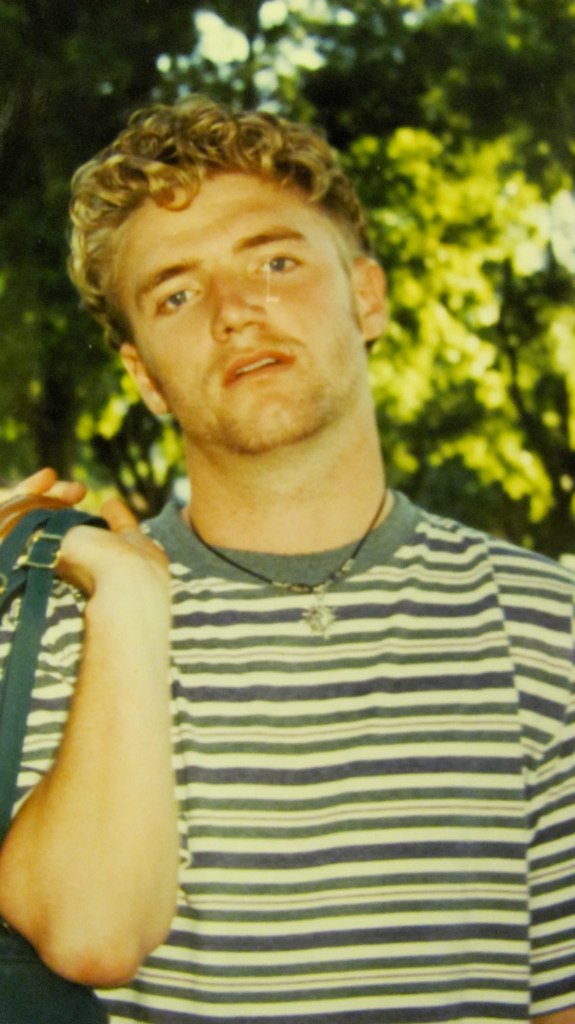
    (Marcus Slease in 1995)

    Irony and sincerity combined like Voltron, to form a new movement of astonishing power.”

    — Jesse Thorn

     
    How do you feel about irony? And sincerity? Are they really opposites? Like all good art, they make for good cross fertilisation. In 1995, after coming home early from a Mormon mission, to a small town in Utah that was never really my home, I got a perm. I thought I was still alternative but Nirvana had crossed over. The world was never the same, per always, again. Irony creates distance and it is needed to keep us honest with our sincerity. And to be honest, the closer you look, life is absurd. Yes, that is what I need for my well being. Art that cuts through the falseness but with compassionate mindfulness. In a dharma talk by Gil Fronsdal, he said that Buddhism, at its heart, is existentialism without the angst. I can dig that. 


  • The new international issue of Past Simple out now. Manchester, New York City, Lisbon, London, Seattle, Krakow, Warsaw, Wroclaw, Liège, Madrid, Cambridge (MA), Worcester (MA), Pittsburgh, Prague,  Eindhoven, North Queensland (Australia), and more . . .

    Edited by Marcus Slease and Grzegorz Wroblewski. 

     
    The issue is full of wild, electric, strange & wonderful writing. 

    Check it out over here: 

    (web design and development by Ewa Rasala)
  • The moon is sometimes bloated. There is so much. Just stop, slow down, take a look at your brain. It is very bloated. Put your thoughts in a balloon, maybe 99 red balloons, and pop them. Over and over.

    Here are some balloons. From my book The Green Monk, forthcoming from Boiler House Press on 5th November 2018.

    Available at The Elephants.

  • The opening, for now, of The Autobiography of Don Whiskers.

    My novel in progress (partly a memoir).

    It begins in Northern Ireland and then moves to Milton Keynes, England.

    And then a trailer park in Vallejo, California.

    Don Whiskers is the main character.


  • My poem “Feedback” (part of my manuscript The Green Monk forthcoming from Boiler House Press) was published in the November issue of Poetry magazine. Nice!

    Folks published in the Nov issue of Poetry magazine were asked for readings lists.

    I’ve added mine.

    Some Tim Atkins, Jeff Hilson, Colin Herd, bill bissett, Victoria Brown, Isabel Waidner, Judson Hamilton, Richard Brammer, Joanne Kyger, Edouard Leve, Diane di Prima, and Ben Lerner. Check out the reading lists over here:


    https://www.poetryfoundation.org/harriet/2017/11/reading-list-november-2017

    #timatkins #jeffhilson #colinherd #billbissett#victoriabrown #isabelwaidner #judsonhamilton #richardbrammer#joannekyger #edouardleve #dianediprima #benlerner #boilerhousepress#dostoyevskywannabe

  •  


    from Donald Barthelme’s “The Flight of Pigeons from the Palace”
  • Nice book launch last night. Lots of folks scattered around the bookshop. Great chats with fab folks afterwards. Thanks for coming! Thank you Desperate Literature and Dostoyevsky Wannabe. Gud Tymz!


  • indie-pop, post-punk, new wave and sixties music.

    Scared to Dance. London.

    Wee interview over at Swimmer’s Club:

    https://www.all-new.swimmersclub.co.uk/scared-to-dance/


  • Nice review of Wróblewski’s Zero Visibility over at Asymptote Literary Journal. Another planet indeed.

    http://www.asymptotejournal.com/blog/2017/09/14/in-review-grzegorz-wroblewskis-zero-visibility/